Day Fifty-Six with Mark: Mark 14:66-72

Today in Mark we look at Mark 14:66-72.  This is where Peter denies Jesus:

66 While Peter was below in the courtyard, one of the servant-girls of the high priest came by. 67 When she saw Peter warming himself, she stared at him and said, “You also were with Jesus, the man from Nazareth.” 68 But he denied it, saying, “I do not know or understand what you are talking about.” And he went out into the forecourt.  Then the cock crowed.  69 And the servant-girl, on seeing him, began again to say to the bystanders, “This man is one of them.” 70 But again he denied it. Then after a little while the bystanders again said to Peter, “Certainly you are one of them; for you are a Galilean.” 71 But he began to curse, and he swore an oath, “I do not know this man you are talking about.” 72 At that moment the cock crowed for the second time. Then Peter remembered that Jesus had said to him, “Before the cock crows twice, you will deny me three times.” And he broke down and wept.

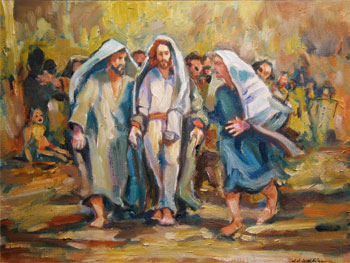
images.jpgOne of the things, that to me, is always important to remember about this text is that it isn’t just Judas that betrayed Jesus on this night.  Yes, Judas was the one that led them to Jesus, but here, we see Peter, three times deny Jesus.  He had the chance to stand up for Jesus in this moment.  What can we learn from this?

First, know this.  We all fail.  Everyone one of us.  Here is Peter.  The leader of the Apostles.  The one that preaches on Pentecost.  The one that everyone looks to.  Peter.  The rock.  And he fails.  He fails worse than any of us probably ever will.

So, when you blow it, remember.  Peter did too.  He failed.  We all failed.  It’s part of our human condition.  That’s not to say that we want to fail or that we desire to fail.  It is to say that it will happen to each of us.

But, second, your worst mistakes don’t define you.  Yes, we see Peter fail here.  But fast forward to Acts.  It is Peter that is the leader.  He is the speaker.  He is the one that everyone looks to, to explain what is happening, to point everyone to Jesus.  Peter did leave and grieve, but Jesus restored him.  And when Jesus forgave him, he was able to forgive himself, and return back into leadership, return back to the family.

Peter failed, yes.  But through the grace of God, Peter’s failure didn’t define him.  God’s grace did.

And last, the disciples didn’t hold Peter’s failure over his head.  The forgave him.  They didn’t keep bringing up his mistake.  They let it go as well.

We need to forgive ourselves, but we do not need to hold the mistakes of others over their heads.  God doesn’t define us by our mistakes.  Let’s not define each other in the same way.  God has shown us grace and mercy.  Let’s show that same grace and mercy to each other.

God doesn’t hold our mistakes over our head.  Let’s not hold other’s mistakes over their heads.

Grace is the only answer, it’s the only thing that truly and forever changes lives.

Tomorrow we’ll look at Mark 15:1-15.

What questions do you have?  How does this strike you?  Shoot me an email, comment below, or connect with me through social media.

If you’d like to receive these thoughts by email, be sure to click here and join my email devotional group!
Day Forty-Three with Mark: Mark 11:15-19

Today we look at one of the more well know passages in the Bible, Mark 11:15-19, where Jesus cleanses the temple.

15 Then they came to Jerusalem. And he entered the temple and began to drive out those who were selling and those who were buying in the temple, and he overturned the tables of the money changers and the seats of those who sold doves; 16 and he would not allow anyone to carry anything through the temple. 17 He was teaching and saying, “Is it not written,

‘My house shall be called a house of prayer for all the nations’?
But you have made it a den of robbers.”
18 And when the chief priests and the scribes heard it, they kept looking for a way to kill him; for they were afraid of him, because the whole crowd was spellbound by his teaching. 19 And when evening came, Jesus and his disciples went out of the city.

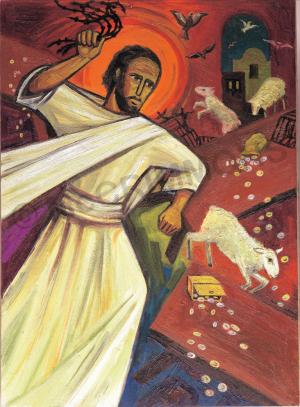
835_1.jpgOk, let’s unpack what is happening here.  In the Old Testament there were prescribed offerings to made for sin.  But, most people, even back then, didn’t have sheep in their backyard.  So, shepherds and others would bring the sheep, the bulls, the sparrows, all the things prescribed for offerings to the Temple where they could be sold.
Ok, that sounds simple enough.  But here’s the thing.   The Temple treasury wouldn’t accept Roman money, because it had Ceaser on it, and he claimed to be divine.  So, before you purchase your bull or goat or sparrow, you had to exchange your Roman money for Temple money that you could then use to buy your animal for the sacrifice.

And of course, these “money changers” would gouge the people coming to worship.

And that’s the thing that angered, yes, angered Jesus.  Here were people that were coming to worship, and everyone was standing in their way.  Everyone was profiting off of them.  The people that God had sent to them to be a means by which they could worship and experience God these individuals were only using the people as a means to gain themselves.

And this really did make Jesus mad.  One of the many things He did was that He welcomed people in, over and over again.  And here are those that should be helping others worship, instead they are making it hard and just using folks.

And so Jesus hits the reset button.

Jesus cleans it all out.

Because people matter most. That’s what Jesus is saying.  That’s why Jesus is doing.  That’s what Jesus is trying communicate.

People matter.

Today, let’s work to help people know Jesus.  Let’s show grace, let’s show mercy, let’s open doors, let’s be difference makers.

Let’s pull folks in, not push folks away.

Tuesday we’ll look at Mark 11:20-33.

What questions do you have?  How does this strike you?  Shoot me an email, comment below, or connect with me through social media.

If you’d like to receive these thoughts by email, be sure to click here and join my email devotional group!

Day Forty-Two with Mark: Mark 11:12-14

Today in Mark we look at Mark 11:12-14:

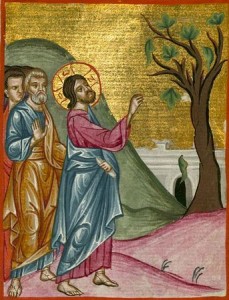
12 On the following day, when they came from Bethany, he was hungry. 13 Seeing in the distance a fig tree in leaf, he went to see whether perhaps he would find anything on it. When he came to it, he found nothing but leaves, for it was not the season for figs. 14 He said to it, “May no one ever eat fruit from you again.” And his disciples heard it.

Lunea-Mare-229x300.jpgThis short passage is one of those one’s that can be difficult for us understand.  This passage is also told to us in Matthew 21:18-22.  In this passage we see Jesus come upon a fig tree and condemn it for not having any fruit.
One of the things that is confusing it that He condemns it for not having any fruit, even though it is not the season for fruit.  Why did He do that?  This is one of those cultural understandings that we talked about yesterday.  While it was not in season, it did have leaves.  And normally when a tree had leaves it would have fruit as well.  It was not uncommon for a tree to produce fruit, even out of season, when it had leaves.

So, from a distance you would have assumed that it would have fruit, all the signs were there.

And this gets to the bigger point of what Jesus is doing here.  Throughout scripture, the fig is often understood to be symbolic for Israel; for the Old Covenant.  One of the commands that God had given was to be a light to the world, and that command was being fulfilled in descendant of David – Jesus Christ.

Just as the fig tree was not longer going to produce fruit, now the Old Covenant of the Law was going to be replaced by the New Covenant of Grace.  Something new was coming.

The old was passing away.  The new was coming.

In Jesus Christ, God was fulfilling all the Old Covenant and all the promises of the Old Testament.  And was doing something new what would change everything.

The fig tree is symbolic of that.

Today, what new thing is God doing in our lives?  What promises is He wanting to fulfill? Where is God wanting to bring forth life?

Today, may we keep our eyes open to what God wants to do.  And may we follow.

Friday we’ll look at Mark 11:15-19.

What questions do you have?  How does this strike you?  Shoot me an email, comment below, or connect with me through social media.

If you’d like to receive these thoughts by email, be sure to click here and join my email devotional group!

Day Forty with Mark: Mark 10:46-52

I hope everyone had a great Thanksgiving!  Now we are entering into the time of Advent, getting ready for Christmas.  During this season, may our eyes, our ears, our hearts, all that we are be looking for the grace of Christ in each moment!

Today we look at Mark 10:46-52:

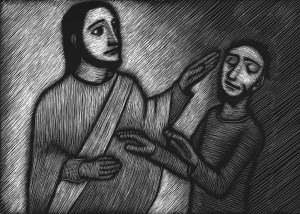
46 They came to Jericho. As he and his disciples and a large crowd were leaving Jericho, Bartimaeus son of Timaeus, a blind beggar, was sitting by the roadside. 47 When he heard that it was Jesus of Nazareth, he began to shout out and say, “Jesus, Son of David, have mercy on me!” 48 Many sternly ordered him to be quiet, but he cried out even more loudly, “Son of David, have mercy on me!” 49 Jesus stood still and said, “Call him here.” And they called the blind man, saying to him, “Take heart; get up, he is calling you.” 50 So throwing off his cloak, he sprang up and came to Jesus. 51 Then Jesus said to him, “What do you want me to do for you?” The blind man said to him, “My teacher, let me see again.” 52 Jesus said to him, “Go; your faith has made you well.” Immediately he regained his sight and followed him on the way.

Blind Bartimaeus alteredToday we see Jesus heal Bartimaeus, we see Jesus restore his sight. And when we read this passage, there are a couple of things that stand out to me.  First, notice what the man calls Jesus.  Son of David.  Jesus is called Son of God a lot in the Bible.  He calls Himself Son of Man a lot as well.  But this is a unique title that is telling.
Bartimaeus, in calling Jesus Son of David, understand that He is the one that is to come from the line of David.  The Messiah is to be a descendant of David.  Bartimaeus is speaking the truth, Jesus is the one that is to come from David’s line. But here’s the thing.  The Messiah, the Son of David, that they were looking for was a political king that would drive out the Romans and establish that earthly kingdom like David.

So, yes, Bartimaeus was right in knowing who Jesus was.  But he was wrong in understanding what Jesus was here to do.  He made assumptions about who Jesus was.  And he missed what Jesus was wanting to do.

Let’s not make the same mistake.

Second, notice that once again Jesus heals someone’s sight. Someone is able to see because of what Jesus has done.

One thing to always remember in the Gospels when Jesus heals the blind and restores sight, He isn’t just restoring physical sight.  He’s restoring the ability to see spiritually.  In 2 Corinthians 4:4 it says:

In their case the god of this world has blinded the minds of the unbelievers, to keep them from seeing the light of the gospel of the glory of Christ, who is the image of God.

Without Christ, we may be able to “see” but we can’t see.  The sight that Jesus provides is more than physical.  It’s spiritual.  Jesus grace (we in the United Methodist tradition call this grace prevenient) restores our ability to see.  To know.  To understand.  Jesus’ grace, given to all, allows us to choose, to follow, or to reject.  To not follow.  Not all that Jesus healed followed Him.

But when He restores our sight through His grace, we can see.  We can choose.  We can follow.  We can see.

Today, may we allow His grace into our lives, may we see.  And may we follow Him, wherever He calls!

Tomorrow we’ll look at Mark 11:1-11.

What questions do you have?  How does this strike you?  Shoot me an email, comment below, or connect with me through social media.

If you’d like to receive these thoughts by email, be sure to click here and join my email devotional group!

Commitment, Healing, and Dreaming

581086_382241601814983_555317416_nSpeechless.  That’s something hard for me to be.  I am very rarely at a loss for words.  But that’s where I am right now.  Speechless.

This past Sunday we had our time of renewal and commitment here at St. Matthew’s.  We reaffirmed our Baptism and made our ministry and financial commitments.  And y’all, it may have been the most amazing response I’ve ever seen.  I wanted to give you a brief update, and then let you know this.  We need you!

Sunday, we had 137 financial commitment cards returned, an increase of 37% from our initial commitment Sunday last year.  Our initial pledged support was up nearly 50% from last year and of those cards that were returned 70% of those that that renewed their commitment increased that commitment.  And over the past year we have 93 new individuals or families that have given to our church.

We also had 64 cards returned making ministry commitments.  New commitments were made to serve in youth, children, evangelism, so many different ministries here at our church.  It was truly amazing to see and experience what God did in worship this past Sunday!

One of the questions that someone asked me is what is my vision for our church?  I said Sunday that’s kind of hard right now; we are still hanging up pictures at our home; we are still figuring it all out.  But I will tell you this, my vision is not a vision that is programmatic.  My vision is not about necessarily what we do.  It’s about who we are.  My vision is a word I couldn’t get out my head this past week.

Healing.

We are called as a church to be about healing. There are children in our community that are terrified because their mom and dad won’t stop fighting. And they need healing.

There are youth that are giving into peer pressure, doing anything that they can do to feel loved.  And they need healing.

There are older adults that are looking for a reason to just go on living. And they need healing.

There are families that are one light breeze away from falling apart. And they need healing.

There are people that are spending money they don’t have to buy things they don’t want to impress people they don’t like, all for a sense of worth. And they need healing.

The healing we all need, the cure of our souls is Jesus. He is the source of healing in our church, our community, our world.  We all need His healing grace. And we are called to agents of that healing to a world and community in need of healing.  The world and our community are not in need of programs or religion but in need of the healing of Jesus Christ.  That’s our call.

And we need you.  We really do.  To do this, to be this agent of healing, we need everyone connected, plugged in, giving, serving, being faithful. What a great response we had this past week.  But we need everyone.

Imagine what we can do.  Imagine what can happen.  Imagine the difference it can make.  Imagine.

And we can do it.  We can.  Together.  As one.  Unified.  Living out His healing grace.

There is still time to turn in your commitment cards if you haven’t. There will be more available at the church.

We need you.  The kingdom needs you.  And we can do it. Together, as one we can do it.

May God be glorified in all that happens in this place!

Day Thirty-One with Mark: Mark 8:1-10

Today in Mark 8:1-10 we see Jesus feed another multitude.  Earlier in Mark He fed the 5000.  Today, He feeds the 4000:

Feeding the Four Thousand
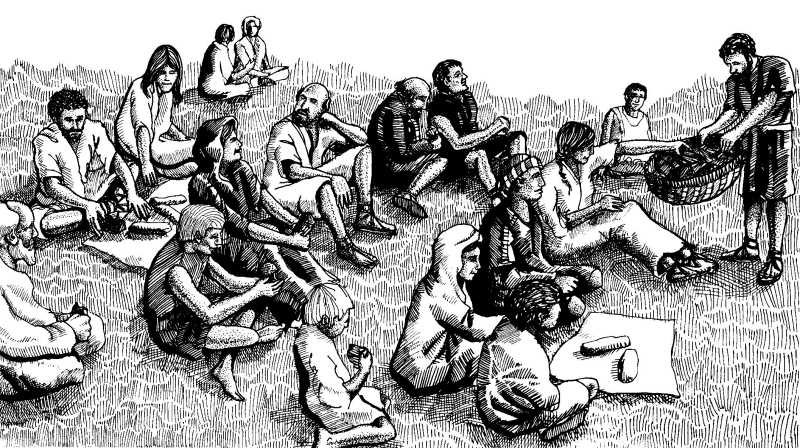
8 In those days when there was again a great crowd without anything to eat, he called his disciples and said to them, 2 “I have compassion for the crowd, because they have been with me now for three days and have nothing to eat. 3 If I send them away hungry to their homes, they will faint on the way—and some of them have come from a great distance.” 4 His disciples replied, “How can one feed these people with bread here in the desert?” 5 He asked them, “How many loaves do you have?” They said, “Seven.” 6 Then he ordered the crowd to sit down on the ground; and he took the seven loaves, and after giving thanks he broke them and gave them to his disciples to distribute; and they distributed them to the crowd. 7 They had also a few small fish; and after blessing them, he ordered that these too should be distributed. 8 They ate and were filled; and they took up the broken pieces left over, seven baskets full. 9 Now there were about four thousand people. And he sent them away. 10 And immediately he got into the boat with his disciples and went to the district of Dalmanutha.

NT Ch15Ok, so why does Jesus feed large crowds twice?  Not to be trite, but the simple answer is that Jesus loved people, and this is at least twice in His ministry when large crowds were with Him, and He knew that if He was to send them away without food they may not make it home.  So, why did Jesus do this twice?  The simple reason is because people needed it twice.

But there is something deeper and bigger going on here, as there is with almost all that happens in the Bible. There are two things that jump out to me in this reading that I think are significant.  First, look at the “faith” of the Disciples.  Remember, they had already seen Jesus feed an even larger crowd before. But when He says that the people must be fed, they say, how can we feed this many people here in the desert?

They’d seen Jesus do it before.  They knew that He could do it, they saw it with their own eyes, the experienced it, they helped.  And yet, they still doubted.

Aren’t we like that?  Don’t we know what God can do?  Haven’t we seen Him do it before?  Aren’t we aware of His power?  Yes.  Yes we are.  And yet, don’t we doubt, as they did?  Don’t we forget, as they did?  They did.  And we do.

On one hand, we need to learn, as they did, to have faith, to not doubt, to remember the faithfulness of God.  Remember how He has been there.  Remember what He has done.  Remember who He is. Remember His faithfulness from generation to generation.

But when we do, we need to show ourselves grace as well. Because we weren’t the first to doubt.  The very ones that walked with Jesus doubted as well.  And He didn’t give up on them. And He won’t give up on us either.

Second, many scholars believe that the first feeding of the multitude (the 5000) was a Jewish crowd, and many think that this crowd, if not mainly Gentile, had many Gentiles within it.  This was on the western side of the Sea of Galilee, which was the more Gentile area.  We cannot say for 100% certain that there were Gentile there, but reading into the context of scripture, it’s a safe assumption.

So, we have seen Him heal Gentiles.  Now we see Him feed Gentiles. We are seeing more and more that Jesus Christ came to redeem the world. All the world.  All that call upon His name.  All

And in a world that is so, so, so very polarized and full of hardening lines, I think it’s important for us to remember that Jesus Christ came for the world.  The entire world. For all who believe.

Today, may we live out that grace with all that we meet.

Friday we’ll look at Mark 8:11-12.

What questions do you have?  How does this strike you?  Shoot me an email, comment below, or connect with me through social media.

If you’d like to receive these thoughts by email, be sure to click here and join my email devotional group!

Day Twenty-one with Mark: Mark 6:1-6

Today we are looking at Jesus’ homecoming in Mark 6:1-6.  It really doesn’t go well for Him:

The Rejection of Jesus at Nazareth
6 He left that place and came to his hometown, and his disciples followed him. 2 On the sabbath he began to teach in the synagogue, and many who heard him were astounded. They said, “Where did this man get all this? What is this wisdom that has been given to him? What deeds of power are being done by his hands! 3 Is not this the carpenter, the son of Mary and brother of James and Joses and Judas and Simon, and are not his sisters here with us?” And they took offense at him. 4 Then Jesus said to them, “Prophets are not without honor, except in their hometown, and among their own kin, and in their own house.” 5 And he could do no deed of power there, except that he laid his hands on a few sick people and cured them. 6 And he was amazed at their unbelief.

JeffWatkinsJRejectedatNazoilJesus had gone to many different places in Mark’s Gospel and one of the things that we have seen over and over again is His power and His authority.  Folks are amazed at it.  And today, we seem Him go to His hometown of Nazareth, and they too see that authority.  They too see His power, they hear of His mighty deeds.

And they took offense at Him.  Wow.  They knew His family.  They knew His “mama and them” and just couldn’t believe that this was the same person that they knew.  I just can’t get over that phrase.  They took offense at Jesus.  So because of that, Jesus wasn’t able to do any deeds.  So, a couple of things.

First, why did they take offense?  Scripture doesn’t say, but perhaps they were thinking a couple of things.  Why Him?  I mean, what’s so special about Jesus.  We know, but they didn’t.  Or perhaps why not them?   I mean, aren’t they just as able to those things as Jesus?

Maybe it comes down to jealousy.  They missed what God was doing. So often in the Bible, so often in Jesus ministry, that’s one of the things that we see.  People miss what God is doing.  Most times it’s because they are not looking.  This time, it’s because they are looking, and they don’t like what they see.

Today, let’s look with discernment.  Let’s prayerfully look.  Let’s take all that we see under the grace of God.  Let’s not look past anyone.  And let’s not be jealous of anyone.  

The other thing about this is that Jesus couldn’t do any miracles because of their lack of faith.  Miracles aren’t “invoked” because of faith.  It’s not like we can make them happen by having “enough” faith.  That’s not the way that God works.  But, that said, in the order of salvation, we have a part to play.  We have to respond.  We have to do our part.  God’s grace doesn’t do us any good if we won’t accept it.

Perhaps Jesus couldn’t do any miracles there, because they weren’t willing to receive them. 

Today, may we be open to whatever God wants to do.

Tomorrow we’ll look at Mark 6:6-13.

What questions do you have?  How does this strike you?  Shoot me an email, comment below, or connect with me through social media.

If you’d like to receive these thoughts by email, be sure to click here and join my email devotional group!

Day Nineteen with Mark: Mark 5:21-43

In Mark there are “sandwich stories.”  Those are stories that have a beginning, then something else happens in the middle, and then the thing that is started in the beginning is finished.  In this way, the stories are linked, Mark is trying to say something, not just about the individual story, but about the combination of the two stories together.

Today we see that in Mark 9:21-43:

A Girl Restored to Life and a Woman Healed

21 When Jesus had crossed again in the boat to the other side, a great crowd gathered around him; and he was by the sea. 22 Then one of the leaders of the synagogue named Jairus came and, when he saw him, fell at his feet 23 and begged him repeatedly, “My little daughter is at the point of death. Come and lay your hands on her, so that she may be made well, and live.” 24 So he went with him.

And a large crowd followed him and pressed in on him. 25 Now there was a woman who had been suffering from hemorrhages for twelve years. 26 She had endured much under many physicians, and had spent all that she had; and she was no better, but rather grew worse. 27 She had heard about Jesus, and came up behind him in the crowd and touched his cloak, 28 for she said, “If I but touch his clothes, I will be made well.” 29 Immediately her hemorrhage stopped; and she felt in her body that she was healed of her disease. 30 Immediately aware that power had gone forth from him, Jesus turned about in the crowd and said, “Who touched my clothes?” 31 And his disciples said to him, “You see the crowd pressing in on you; how can you say, ‘Who touched me?’” 32 He looked all around to see who had done it. 33 But the woman, knowing what had happened to her, came in fear and trembling, fell down before him, and told him the whole truth. 34 He said to her, “Daughter, your faith has made you well; go in peace, and be healed of your disease.”

35 While he was still speaking, some people came from the leader’s house to say, “Your daughter is dead. Why trouble the teacher any further?” 36 But overhearing what they said, Jesus said to the leader of the synagogue, “Do not fear, only believe.” 37 He allowed no one to follow him except Peter, James, and John, the brother of James. 38 When they came to the house of the leader of the synagogue, he saw a commotion, people weeping and wailing loudly. 39 When he had entered, he said to them, “Why do you make a commotion and weep? The child is not dead but sleeping.” 40 And they laughed at him. Then he put them all outside, and took the child’s father and mother and those who were with him, and went in where the child was. 41 He took her by the hand and said to her, “Talitha cum,” which means, “Little girl, get up!” 42 And immediately the girl got up and began to walk about (she was twelve years of age). At this they were overcome with amazement. 43 He strictly ordered them that no one should know this, and told them to give her something to eat.

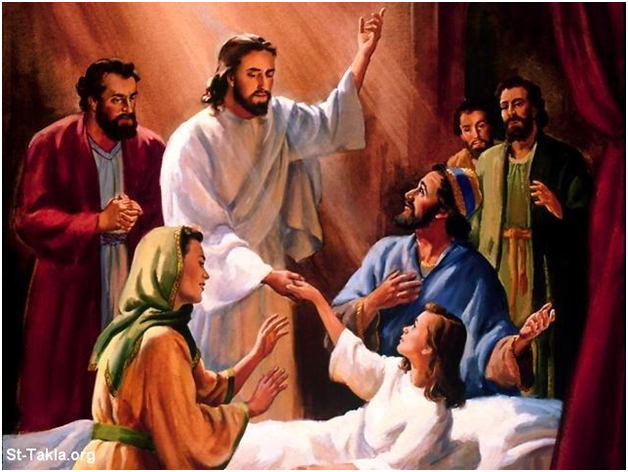
image-717467Ok, so we see two stories.  We see Jesus healing Jarius’ daughter.  Then we see Him heal a woman who had been bleeding for twelve years.  Why does Mark tell these two stories in combination?

Well, in the first one story we see that He is going to heal the daughter of a leader of the synagogue.  Notice, we don’t know the daughter’s name.  We only know her as Jarius’ daughter.  Now, Jarius was important, he was a leader of the synagogue, that’s a big deal.  But in that culture, children were not important.  They were simply a step of property.  They didn’t have the same softness towards children that we do today in our world.

But not so with Jesus.  Even though this child would not have been seen as significant, Jesus goes out of His way to heal her.  This child is worthy of His grace and His healing.  All are worthy of His grace and His healing.  No one is insignificant or unworthy.  All are loved, all are valued, and Jesus died for them all.

All.  That’s a big word for Jesus.  All.

And we see that in the middle portion of this text, we don’t so much see Jesus heal a woman as we see a woman have faith that simply touching Jesus would heal her.  And so she takes this leap, takes this risk, and touches Jesus.  And in this, she is healed.

But, just like the child, she would not have been seen as important in the culture. And a woman, much less a woman who had been bleeding (making her unclean) would never dare reach out and touch a religious leader (making Him unclean), but she was desperate.  And she had faith.

And you can’t make Jesus unclean.  Because light drives out darkness.  And good is stronger that evil.  And life is stronger than death.  And Jesus triumphs overall.

Today, we see two “unworthy” receive healing.  So, in that, know that you are worthy of knowing and seeing God’s grace, no matter what.

And let us not look past those today that may be seen as unworthy.  May we seek to love them as Jesus does.

Friday we’ll look at the specifics in Mark 5:21-43.

What questions do you have?  How does this strike you?  Shoot me an email, comment below, or connect with me through social media.

If you’d like to receive these thoughts by email, be sure to click here and join my email devotional group!

Day Fourteen with Mark: Mark 4:1-20

Today we are looking again at Mark 4:1-20.  Yesterday we talked about why it is that Jesus taught in parables.  Today we are going to look into what exactly He is talking about in this passage:

The Parable of the Sower
4 Again he began to teach beside the sea. Such a very large crowd gathered around him that he got into a boat on the sea and sat there, while the whole crowd was beside the sea on the land. 2 He began to teach them many things in parables, and in his teaching he said to them: 3 “Listen! A sower went out to sow. 4 And as he sowed, some seed fell on the path, and the birds came and ate it up. 5 Other seed fell on rocky ground, where it did not have much soil, and it sprang up quickly, since it had no depth of soil. 6 And when the sun rose, it was scorched; and since it had no root, it withered away. 7 Other seed fell among thorns, and the thorns grew up and choked it, and it yielded no grain. 8 Other seed fell into good soil and brought forth grain, growing up and increasing and yielding thirty and sixty and a hundredfold.” 9 And he said, “Let anyone with ears to hear listen!”

The Purpose of the Parables
10 When he was alone, those who were around him along with the twelve asked him about the parables. 11 And he said to them, “To you has been given the secret of the kingdom of God, but for those outside, everything comes in parables; 12 in order that
‘they may indeed look, but not perceive,
and may indeed listen, but not understand;
so that they may not turn again and be forgiven.’”
13 And he said to them, “Do you not understand this parable? Then how will you understand all the parables? 14 The sower sows the word. 15 These are the ones on the path where the word is sown: when they hear, Satan immediately comes and takes away the word that is sown in them. 16 And these are the ones sown on rocky ground: when they hear the word, they immediately receive it with joy. 17 But they have no root, and endure only for a while; then, when trouble or persecution arises on account of the word, immediately they fall away. 18 And others are those sown among the thorns: these are the ones who hear the word, 19 but the cares of the world, and the lure of wealth, and the desire for other things come in and choke the word, and it yields nothing. 20 And these are the ones sown on the good soil: they hear the word and accept it and bear fruit, thirty and sixty and a hundredfold.”

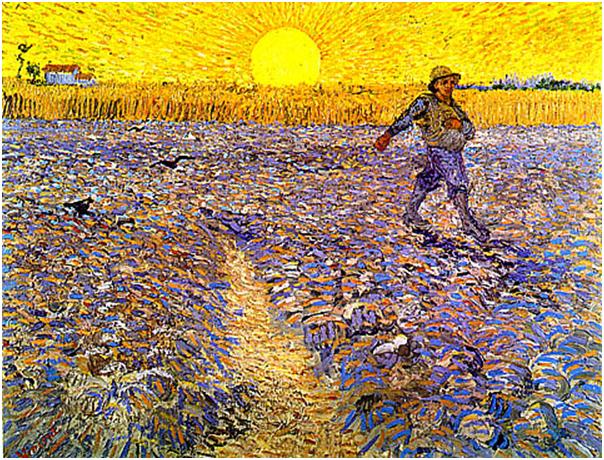
092208_1552_TheParableo1_1We see Jesus tell a parable, much like an illustration or example, about someone sowing seeds.  Some seeds he sows feel on path and birds carried them off.  Others on ground that was rocky, they sprouted up and then without depth, withered.  Others among thorns and they choked them off.  And finally some seed fell on good ground and brought forth lots of yield.

In verses 13-20 Jesus explains to us what exactly is happening here.  I think for us the thing that we need to notice about all these scenario is that in each of them, the seed lands upon the ground, and in some cases begins to show some growth. But then something happens.  Either birds (Satan) take them, or the lack of depth, or the thorns, cause them from fully blossoming.

The seed is that faith, that grace of God given to us.  Grace is not just given to Christians, but through prevenient grace, grace is show to all.  All people, even those that reject God, as shown His goodness.  The bible says that all good gifts from God, so if it’s in your life, and it’s good, it’s from God.

So, the seed is sown, grace is given, and what happens next?  We need to be aware of 3 things when God’s grace is given:

First, we aren’t able to even process we’ve been given it.  Spiritual warfare, distractions, things come against us and before we can even process that we’ve been given grace, we’ve moved on.  So, in other words, pay attention to God’s grace given you.

Second, it is received and it is good. But, there is no depth.  And trials come.  Troubles come.  And it dies on the vine.  So, it isn’t just enough to “believe” and get excited about Jesus.  We’ve got to get deep roots.

Faith isn’t just a matter or excitement of joy.  We need discipline.  Because it’s going to be hard at times.  There’s going to be challenges at times.  There’s going to be troubles.  If we don’t have those roots we will fade.  How do we develop roots?  We attend to things of God.  We read.  We pray.  We stay connected to God’s people.  The way I put it is we read our Bible, we pray, we go to church.  Faithfully doing these things give us roots to survive troubles.

And the third thing we see is the seed is sown and thorns choke them off.  The concerns of the world draw our focus from God, to the world.  Stay focused.  Remember what matters.  Focus on what counts.  Keep your mind on the things of God in all things.  

And last we see ground that is receptive, that is good, that is ready.  Good dirt.  That’s what we want to be.  Receptive to God’s word and focused on seeing it grow when it’s given to us.

Today may we be good dirt!

Tomorrow we’ll look at Mark 4:21-32.

What questions do you have?  How does this strike you?  Shoot me an email, comment below, or connect with me through social media.

If you’d like to receive these thoughts by email, be sure to click here and join my email devotional group!

Day Five with Mark: Mark 2:1-12

Today we are going to be looking at Mark 2:1-12. It is entitled Jesus Heals a Paralytic. Also, this past Friday I did a video blog going a little deeper into Mark 1.  If you’d like to check it out, you can click here.

When he returned to Capernaum after some days, it was reported that he was at home. 2 So many gathered around that there was no longer room for them, not even in front of the door; and he was speaking the word to them. 3 Then some people came, bringing to him a paralyzed man, carried by four of them. 4 And when they could not bring him to Jesus because of the crowd, they removed the roof above him; and after having dug through it, they let down the mat on which the paralytic lay. 5 When Jesus saw their faith, he said to the paralytic, “Son, your sins are forgiven.” 6 Now some of the scribes were sitting there, questioning in their hearts, 7 “Why does this fellow speak in this way? It is blasphemy! Who can forgive sins but God alone?” 8 At once Jesus perceived in his spirit that they were discussing these questions among themselves; and he said to them, “Why do you raise such questions in your hearts? 9 Which is easier, to say to the paralytic, ‘Your sins are forgiven,’ or to say, ‘Stand up and take your mat and walk’? 10 But so that you may know that the Son of Man has authority on earth to forgive sins”—he said to the paralytic— 11 “I say to you, stand up, take your mat and go to your home.” 12 And he stood up, and immediately took the mat and went out before all of them; so that they were all amazed and glorified God, saying, “We have never seen anything like this!”

6793887902_15fa696a37Looking at today’s text, a couple of things to notice. The text here tells how the friends of the man who is paralyzed dug through the roof.  And that’s a pretty good description of what they actually would have done. These houses would have had thatched or mud roofs, roofs that would have been able to be dug through.

So, digging through the roof was not the hard part. This was the hard part.  In a culture where pride mattered a great deal, you didn’t just go up onto someone’s roof and dig a hole.  It just wasn’t something you did. But, their friend needed help. And Jesus could help. And they were desperate to see their friend get the help that he needed.  So, they did what they had to do.

They valued their friend above all else. And that’s one of the themes of this passage.  Notice if you will, two groups. The friends, that would do anything to see their friend healed, and the religious leaders that grumbled about this healing because Jesus forgave his sins.

In this, we see two groups.  One valued that relationship and one that valued religion.  This is someone you need to understand about the religious leaders. They weren’t “bad.”  They were doing what they thought was right.  They were trying to keep the law.  They really weren’t all bad.  But, they were more in love with the religion than they were with the God of the religion.

May we not make the same mistake.  May we love Jesus above all.


Jesus calls Himself in this text the “Son of Man.”  This is a reference prophecies in Daniel that pointed to the coming Messiah.  So each time Jesus called Himself the Son of Man, He is saying that He is the Messiah.

And notice what the true power of the Messiah is in this text. Not the physical healing.  What was the first thing He told the man.  Your sins are forgiven. And then why did He heal?  To show that He has the power to forgive sins.

Jesus shows us what true healing is.  It’s not always physical.  It’s spiritual.  Jesus healed this man’s body.  But more importantly, He healed His soul.  He forgave him.  And honestly, above all else in our lives, that’s what we need.

Spiritual healing.  Forgiveness.  Grace.

That is what Jesus gave this man today.  He healed him.  And today, through His grace, He longs to heal us as well.

Today, may we know the grace of forgiveness.

What questions do you have?  How does this strike you?  Shoot me an email, comment below, or connect with me through social media.

Tuesday we’ll look at Mark 2:13-17.

If you’d like to receive these thoughts by email, be sure to click here and join my email devotional group!