Day Forty-Seven with Mark: Mark 12:18-27

Today in Mark, we look at Chapter 12:18-27

18 Some Sadducees, who say there is no resurrection, came to him and asked him a question, saying, 19 “Teacher, Moses wrote for us that if a man’s brother dies, leaving a wife but no child, the man shall marry the widow and raise up children for his brother. 20 There were seven brothers; the first married and, when he died, left no children; 21 and the second married the widow and died, leaving no children; and the third likewise; 22 none of the seven left children. Last of all the woman herself died. 23 In the resurrection whose wife will she be? For the seven had married her.”

24 Jesus said to them, “Is not this the reason you are wrong, that you know neither the scriptures nor the power of God? 25 For when they rise from the dead, they neither marry nor are given in marriage, but are like angels in heaven. 26 And as for the dead being raised, have you not read in the book of Moses, in the story about the bush, how God said to him, ‘I am the God of Abraham, the God of Isaac, and the God of Jacob’? 27 He is God not of the dead, but of the living; you are quite wrong.”
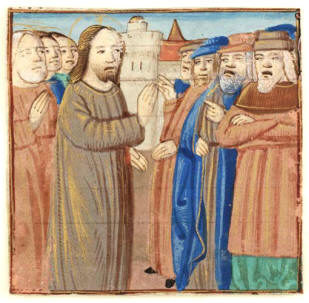
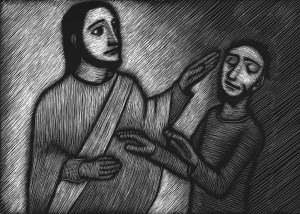
Sadducees 02.jpgOnce again, we see another group coming to test Jesus based off something that they didn’t even really believe.  The Sadducees come asking Him a question about the resurrection when, in fact, they didn’t believe in the resurrection.

First, why didn’t they believe in the resurrection?  There were lots of different divisions of the religious leaders in Jesus day, but one of the greatest divides was between that of the Sadducees and the Pharisees.  They were both religious leaders, but the Sadducees were more associated with the Temple and thePharisees were more associated with local synagogues.

There was also a disagreement among them over the authority of their scripture.  The Pharisees believed that all the Old Testament was inspired and had authority while the Sadducees only believed that to be true of the first five books of the Old Testament, the Torah, the Books of Moses.

And that’s why they didn’t believe in the resurrection, because nowhere in their belief system did they find the resurrection mentioned.  Now it’s found in other places in the Old Testament (and remember, as Christians, we are going to read the Old Testament in a different way, we see evidence of resurrection and eternity there).

Ok, in this text a couple of things to be aware of.  First, the business of brother’s marrying the widow of their brother.  That was the custom of the day, so they were trying to carry for this accepted religious practice of the day into eternity.

In this Jesus says, there will not be marriage in heaven.  So, what is heaven like?  No one really knows, Scripture doesn’t really say, other than to say it will be amazing.  A few things here.  First, notice that Jesus DID NOT say that we will be angels in heaven.  He said we will be LIKE, but will NOT BE.  Angels are created beings, just like humans are created being.  We do not become angels in heaven.  That’s common cultural misconceptions.  Jesus says that will be BE LIKE angels, not BECOME them.  Scripture does not say that we become angels when we did.

So, what does it mean to be like angels?  Good question.  Not really sure.  It is understood to mean that we are part of God’s heavenly court. We have access to God.  We are part of the group that worships God.  We are accepted fully into God’s kingdom.  Like the angels.  Paul attempts to answer this question of what it will be like 1 Corinthians 15 and the best way that he can describe it is “spiritual bodies.”  We don’t know what that means other than it will a body and it will be different.

Ok, another question this raises is will we know each other in heaven?  My belief is yes, based off other passages.  After death, Saul recognized Samuel.  The Disciples recognized Moses and Elijah.  I believe that we will know each other in heaven.  It will be different; it will not be exactly like here on earth.  But in some way, we will know each other.

Remember from this passage, as well as yesterday’s to think about how we approach Jesus.  In both of these passages, people did not come to Jesus for wisdom or to have legitimate questions answered, they came to test Him and trip Him.  They weren’t really seeking His face.

Let’s not make that same mistake.  Let’s seek His face.  And in doing that we will find all we need.

Wednesday we’ll look at Mark 12:28-34.

What questions do you have?  How does this strike you?  Shoot me an email, comment below, or connect with me through social media.

If you’d like to receive these thoughts by email, be sure to click here and join my email devotional group!

Day Forty-Six with Mark: Mark 12:13-17

Today in Mark we look at Mark 12:13-17:

13 Then they sent to him some Pharisees and some Herodians to trap him in what he said. 14 And they came and said to him, “Teacher, we know that you are sincere, and show deference to no one; for you do not regard people with partiality, but teach the way of God in accordance with truth. Is it lawful to pay taxes to the emperor, or not? 15 Should we pay them, or should we not?” But knowing their hypocrisy, he said to them, “Why are you putting me to the test? Bring me a denarius and let me see it.” 16 And they brought one. Then he said to them, “Whose head is this, and whose title?” They answered, “The emperor’s.” 17 Jesus said to them, “Give to the emperor the things that are the emperor’s, and to God the things that are God’s.” And they were utterly amazed at him.

tiberiusToday we look at Jesus’ famous teaching “give to Ceaser that which si Ceaser’s.”  The NRSV has it give to the emperor the things that are the emperor’s.  But what is Jesus really talking about here?

The first thing to notice in this text is  the reason why they are coming to Jesus at all.  It isn’t to learn from Him or seek His wisdom.  They are coming to test him.  But Jesus knew this.  He knew they weren’t really coming to seek wisdom or be drawn closer to God.

They wanted to trap Him and ensure that they would have reason to incite the crowd against Him.

Perhaps that is why they are so amazed at His answer.  He gave the perfect answer, one that was the truth of the situation, while also robbing them of their ability to turn the crowd against Him.

It was a useful straw man argument to talk about not paying taxes.  The point the religious leaders were making was that Ceasar claimed to be a god and shouldn’t a good Jew refuse to honor a false deity.  The argument they were framing was more about idolatry than taxes.  The cultural point of their argument was to pay that tax was to basically honor a false God.

But the thing was, they didn’t believe this. They didn’t actually believe this point they were making.  The Herodians gained their status from King Herod, who was a king appoint by, and who was loyal to, Ceaser, who the false God they were talking about. So their own allegiance and belief showed they didn’t believe in the point they were making, they were just trying to mess with Jesus.

The point for us in this, is this, why and how to do we come to Jesus?  Do we come for wisdom and help?  Do we come with a sincere heart?  They did not. And they didn’t truly see Jesus.

Notice how Jesus answers this question.  He takes the money and say, whos’s face is on it?  Ceaser’s.  So, this money came from Him, it’s not from God anyway.  So, give to Ceaser what he is due.  The money wasn’t from God, it was from Rome, so give it back to them.

So, give to Ceaser what is Ceasers.  We should be good citizens. We are told all through scripture to be good citizens.  Respect authority.  Pray for our leaders.  Be good citizens of our nation.

But most importantly, give to God what is God’s.  And in all things, give God glory.

Tuesday we’ll look at Mark 12:18-27.

What questions do you have?  How does this strike you?  Shoot me an email, comment below, or connect with me through social media.

If you’d like to receive these thoughts by email, be sure to click here and join my email devotional group!

Day Forty-Five with Mark: Mark 12:1-12

Today in Mark, we look at Mark 12:1-12:

Then he began to speak to them in parables. “A man planted a vineyard, put a fence around it, dug a pit for the wine press, and built a watchtower; then he leased it to tenants and went to another country. 2 When the season came, he sent a slave to the tenants to collect from them his share of the produce of the vineyard. 3 But they seized him, and beat him, and sent him away empty-handed. 4 And again he sent another slave to them; this one they beat over the head and insulted. 5 Then he sent another, and that one they killed. And so it was with many others; some they beat, and others they killed. 6 He had still one other, a beloved son. Finally he sent him to them, saying, ‘They will respect my son.’ 7 But those tenants said to one another, ‘This is the heir; come, let us kill him, and the inheritance will be ours.’ 8 So they seized him, killed him, and threw him out of the vineyard. 9 What then will the owner of the vineyard do? He will come and destroy the tenants and give the vineyard to others. 10 Have you not read this scripture:

‘The stone that the builders rejected
has become the cornerstone;
11 this was the Lord’s doing,
and it is amazing in our eyes’?”
12 When they realized that he had told this parable against them, they wanted to arrest him, but they feared the crowd. So they left him and went away.

cornerstone-720x340Philip Yancey wrote a book many years ago entitled The Jesus I Never Knew.  In this book, Yancey talks about what he saw when he just read the Gospel.  I didn’t want to look at what others said about Jesus.  He didn’t want to go off what preachers had preached about Jesus.

He wanted to just see what Jesus actually said and did.  Not what he thought Jesus said and did.  And when he did that, he found something surprising.  The Jesus he found in Scriptures was very different from the Jesus that he expected to find.

For instance, look at this passage.  Jesus is just calling out the Pharisees.  He is going through the history of the people, how each prophet that God sent had been rejected and killed, until finally God sent His beloved son, and He too was to be rejected and killed.

And we see a quote from the Old Testament, the stone the builders rejected has become the cornerstone.  And the Pharisees and religious leaders leave because they know that Jesus is talking about them.

Jesus is a lot of things.  But He is not harmless.  He is not passive.  For those of us that follow Him, He demands that we do just that.  Follow.  He knows that we will make mistakes.  He understands.  And He forgives.

But He always calls us to follow Him.  Keep going.  Keep walking.  Keep chasing.  Keep being faithful.  Keep coming after Him.

The Pharisees rejected.  And in this passage (and in more to come later) He tells them about it.  He points out their mistakes.  He shows them that they have rejected.  He tells them that there will be consequences.

But while they rejected the stone, others plan to build their lives around it.  And for us, that’s our calling today.  To build our lives around this cornerstone.  To make Jesus the foundation of our lives, our families, our everything.

To build everything around Jesus. And with that as the cornerstone, we will have a firm foundation, able to stand up to any storm that faces us.

Today, may Jesus be the cornerstone of lives!

Monday we’ll look at Mark 12:13-17.

What questions do you have?  How does this strike you?  Shoot me an email, comment below, or connect with me through social media.

If you’d like to receive these thoughts by email, be sure to click here and join my email devotional group!

Day Forty-Four with Mark: Mark 11:20-33

Today in Mark, we are going to look at Mark 11:20-33:

The Lesson from the Withered Fig Tree

20 In the morning as they passed by, they saw the fig tree withered away to its roots. 21 Then Peter remembered and said to him, “Rabbi, look! The fig tree that you cursed has withered.” 22 Jesus answered them, “Have faith in God. 23 Truly I tell you, if you say to this mountain, ‘Be taken up and thrown into the sea,’ and if you do not doubt in your heart, but believe that what you say will come to pass, it will be done for you. 24 So I tell you, whatever you ask for in prayer, believe that you have received it, and it will be yours.

25 “Whenever you stand praying, forgive, if you have anything against anyone; so that your Father in heaven may also forgive you your trespasses.”

Jesus’ Authority Is Questioned
27 Again they came to Jerusalem. As he was walking in the temple, the chief priests, the scribes, and the elders came to him 28 and said, “By what authority are you doing these things? Who gave you this authority to do them?” 29 Jesus said to them, “I will ask you one question; answer me, and I will tell you by what authority I do these things. 30 Did the baptism of John come from heaven, or was it of human origin? Answer me.” 31 They argued with one another, “If we say, ‘From heaven,’ he will say, ‘Why then did you not believe him?’ 32 But shall we say, ‘Of human origin’?”—they were afraid of the crowd, for all regarded John as truly a prophet. 33 So they answered Jesus, “We do not know.” And Jesus said to them, “Neither will I tell you by what authority I am doing these things.”

I love the juxtaposition of these two passages together here in the end of Mark 11.  We see two groups of people coming to Jesus.  First, we have His Disciples who were with Jesus and were seeking to learn, to grow, to be faithful.

Yes, the didn’t have all the answers, but they wanted to grow, they wanted to learn, they wanted to follow Jesus.  Even if they didn’t fully understand what that meant or how to do it, they wanted to follow.

So, what happens here?  They see the result of the fig tree being cursed and they are shocked. And Jesus says this, if you believe, this is nothing.  You’ll be able to tell the mountain, go jump in the sea.  And it will.  If you believe, it will answers.

Real quick on this notion of belief and prayer, if we believe, God will answer our prayers.  We don’t always pray as boldly as we should. But here’s the key thing on how God answer this.  Our prayers are ultimately not about what we want, but about what God wants.  In prayer, God bends our will towards His.

So, the closer we walk to God, the more our hearts will be his heart, the more we will desire what He desires, the more we will be molded into Him.

And the more we desire His desires, the more He will grant us those desires. Because when we truly desire Him, He will truly give Himself to us.

Keep seeking God.  Keep praying.  He hears.  He does.  He answers.  He does.  Don’t give up seeking Him. God will show Himself to you.  He will.

Don’t doubt.  Believe.

The disciples are seeking Jesus. And they will find.

hb_lamed-adultery.JPGNow, the other group, they aren’t seeking Him.  They are trying to trip Him and trick Him.  They don’t truly want to know Jesus.  They want to test Him.  Their questions are truly about knowing Jesus; they are about causing trouble.
And because they aren’t really seeking Him, they don’t find what they are looking for.

So, in all things, it starts with this.  Are we seeking Him?  Do we desire to know Him?  If so, pray.  Pray boldly.  Pray with confidence.  Pray with hope.  He will hear.  He will answer.

We can trust.

Wednesday we’ll look at Mark 12:1-12.

What questions do you have?  How does this strike you?  Shoot me an email, comment below, or connect with me through social media.

If you’d like to receive these thoughts by email, be sure to click here and join my email devotional group!

Day Forty-Three with Mark: Mark 11:15-19

Today we look at one of the more well know passages in the Bible, Mark 11:15-19, where Jesus cleanses the temple.

15 Then they came to Jerusalem. And he entered the temple and began to drive out those who were selling and those who were buying in the temple, and he overturned the tables of the money changers and the seats of those who sold doves; 16 and he would not allow anyone to carry anything through the temple. 17 He was teaching and saying, “Is it not written,

‘My house shall be called a house of prayer for all the nations’?
But you have made it a den of robbers.”
18 And when the chief priests and the scribes heard it, they kept looking for a way to kill him; for they were afraid of him, because the whole crowd was spellbound by his teaching. 19 And when evening came, Jesus and his disciples went out of the city.

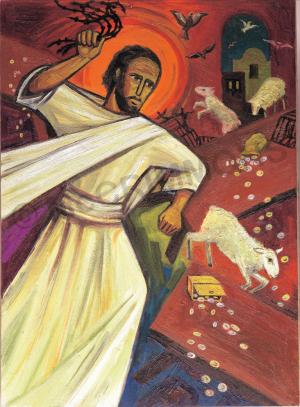
835_1.jpgOk, let’s unpack what is happening here.  In the Old Testament there were prescribed offerings to made for sin.  But, most people, even back then, didn’t have sheep in their backyard.  So, shepherds and others would bring the sheep, the bulls, the sparrows, all the things prescribed for offerings to the Temple where they could be sold.
Ok, that sounds simple enough.  But here’s the thing.   The Temple treasury wouldn’t accept Roman money, because it had Ceaser on it, and he claimed to be divine.  So, before you purchase your bull or goat or sparrow, you had to exchange your Roman money for Temple money that you could then use to buy your animal for the sacrifice.

And of course, these “money changers” would gouge the people coming to worship.

And that’s the thing that angered, yes, angered Jesus.  Here were people that were coming to worship, and everyone was standing in their way.  Everyone was profiting off of them.  The people that God had sent to them to be a means by which they could worship and experience God these individuals were only using the people as a means to gain themselves.

And this really did make Jesus mad.  One of the many things He did was that He welcomed people in, over and over again.  And here are those that should be helping others worship, instead they are making it hard and just using folks.

And so Jesus hits the reset button.

Jesus cleans it all out.

Because people matter most. That’s what Jesus is saying.  That’s why Jesus is doing.  That’s what Jesus is trying communicate.

People matter.

Today, let’s work to help people know Jesus.  Let’s show grace, let’s show mercy, let’s open doors, let’s be difference makers.

Let’s pull folks in, not push folks away.

Tuesday we’ll look at Mark 11:20-33.

What questions do you have?  How does this strike you?  Shoot me an email, comment below, or connect with me through social media.

If you’d like to receive these thoughts by email, be sure to click here and join my email devotional group!

Day Forty-Two with Mark: Mark 11:12-14

Today in Mark we look at Mark 11:12-14:

12 On the following day, when they came from Bethany, he was hungry. 13 Seeing in the distance a fig tree in leaf, he went to see whether perhaps he would find anything on it. When he came to it, he found nothing but leaves, for it was not the season for figs. 14 He said to it, “May no one ever eat fruit from you again.” And his disciples heard it.

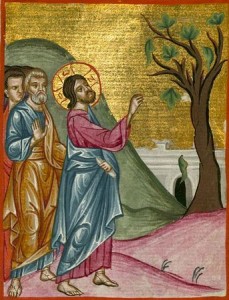
Lunea-Mare-229x300.jpgThis short passage is one of those one’s that can be difficult for us understand.  This passage is also told to us in Matthew 21:18-22.  In this passage we see Jesus come upon a fig tree and condemn it for not having any fruit.
One of the things that is confusing it that He condemns it for not having any fruit, even though it is not the season for fruit.  Why did He do that?  This is one of those cultural understandings that we talked about yesterday.  While it was not in season, it did have leaves.  And normally when a tree had leaves it would have fruit as well.  It was not uncommon for a tree to produce fruit, even out of season, when it had leaves.

So, from a distance you would have assumed that it would have fruit, all the signs were there.

And this gets to the bigger point of what Jesus is doing here.  Throughout scripture, the fig is often understood to be symbolic for Israel; for the Old Covenant.  One of the commands that God had given was to be a light to the world, and that command was being fulfilled in descendant of David – Jesus Christ.

Just as the fig tree was not longer going to produce fruit, now the Old Covenant of the Law was going to be replaced by the New Covenant of Grace.  Something new was coming.

The old was passing away.  The new was coming.

In Jesus Christ, God was fulfilling all the Old Covenant and all the promises of the Old Testament.  And was doing something new what would change everything.

The fig tree is symbolic of that.

Today, what new thing is God doing in our lives?  What promises is He wanting to fulfill? Where is God wanting to bring forth life?

Today, may we keep our eyes open to what God wants to do.  And may we follow.

Friday we’ll look at Mark 11:15-19.

What questions do you have?  How does this strike you?  Shoot me an email, comment below, or connect with me through social media.

If you’d like to receive these thoughts by email, be sure to click here and join my email devotional group!

Day Forty-One with Mark: Mark 11:1-11

Today in our walk through Mark, we look at Mark 11:1-11, the Triumphal Entry, Jesus’ entry into Jerusalem on Palm Sunday:

11 When they were approaching Jerusalem, at Bethphage and Bethany, near the Mount of Olives, he sent two of his disciples 2 and said to them, “Go into the village ahead of you, and immediately as you enter it, you will find tied there a colt that has never been ridden; untie it and bring it. 3 If anyone says to you, ‘Why are you doing this?’ just say this, ‘The Lord needs it and will send it back here immediately.’” 4 They went away and found a colt tied near a door, outside in the street. As they were untying it, 5 some of the bystanders said to them, “What are you doing, untying the colt?” 6 They told them what Jesus had said; and they allowed them to take it. 7 Then they brought the colt to Jesus and threw their cloaks on it; and he sat on it. 8 Many people spread their cloaks on the road, and others spread leafy branches that they had cut in the fields. 9 Then those who went ahead and those who followed were shouting,
“Hosanna!
Blessed is the one who comes in the name of the Lord!
10 Blessed is the coming kingdom of our ancestor David!
Hosanna in the highest heaven!”
11 Then he entered Jerusalem and went into the temple; and when he had looked around at everything, as it was already late, he went out to Bethany with the twelve.

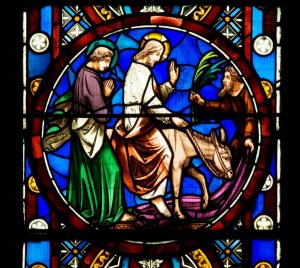
Triumphal-entryOne of the things that we miss here in the West when we read the Bible is that we read it through eyes that are American.  We see things sort of as we see them here.  An example of this for me personally is when I read about Jesus going into the wilderness to be tempted, me being someone that grew up in south Mississippi, when I thought of wilderness, I thought of trees.  It’s just what I pictured in my mind when I thought of wilderness.
Well, when you go to Israel you see that the wilderness that Jesus was tempted in wasn’t trees and forest it the most dreary and desolate desert that you’ll ever see.  Understanding the land and the context really helps you to understand the Word.

Today’s passage is another one that understanding the context really helps you understand.  We see in this Jesus ride into Jerusalem on a donkey, and think of conquering western kings or armies parading into town on the back of a horse or coming in great triumph.

So we see Jesus do this and think – oh, look at Jesus’ humility!  Now, it is true that Jesus is humble, but that’s not what is happening here.  Jesus is not being humble, in coming into town on a donkey, in fact He’s doing just the opposite.  He’s declaring Himself as king.

The triumphal entry is an act of humbleness, sure, but in that context it’s an act of kingly humility. It’s the act of a king.

If someone ever tells you that Jesus never declared Himself as the Messiah, point right to this passage.  That’s exactly what He is doing here.  He is telling everyone who He is.  He is king.

And notice the reaction from the people.  They call Him the one that is to to come from David.  They understood what was happening.  They understood what Jesus was saying.

They understood that He was king.

But, what we will see is that He was not the king that they were expecting.

Today, though, we see Jesus getting the praise and worship that He deserves.  We see Jesus as king.

May He be king in our lives as well.

Tomorrow we’ll look at Mark 11:12-14.

What questions do you have?  How does this strike you?  Shoot me an email, comment below, or connect with me through social media.

If you’d like to receive these thoughts by email, be sure to click here and join my email devotional group!

Day Forty with Mark: Mark 10:46-52

I hope everyone had a great Thanksgiving!  Now we are entering into the time of Advent, getting ready for Christmas.  During this season, may our eyes, our ears, our hearts, all that we are be looking for the grace of Christ in each moment!

Today we look at Mark 10:46-52:

46 They came to Jericho. As he and his disciples and a large crowd were leaving Jericho, Bartimaeus son of Timaeus, a blind beggar, was sitting by the roadside. 47 When he heard that it was Jesus of Nazareth, he began to shout out and say, “Jesus, Son of David, have mercy on me!” 48 Many sternly ordered him to be quiet, but he cried out even more loudly, “Son of David, have mercy on me!” 49 Jesus stood still and said, “Call him here.” And they called the blind man, saying to him, “Take heart; get up, he is calling you.” 50 So throwing off his cloak, he sprang up and came to Jesus. 51 Then Jesus said to him, “What do you want me to do for you?” The blind man said to him, “My teacher, let me see again.” 52 Jesus said to him, “Go; your faith has made you well.” Immediately he regained his sight and followed him on the way.

Blind Bartimaeus alteredToday we see Jesus heal Bartimaeus, we see Jesus restore his sight. And when we read this passage, there are a couple of things that stand out to me.  First, notice what the man calls Jesus.  Son of David.  Jesus is called Son of God a lot in the Bible.  He calls Himself Son of Man a lot as well.  But this is a unique title that is telling.
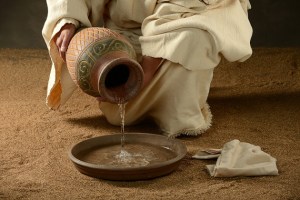
Bartimaeus, in calling Jesus Son of David, understand that He is the one that is to come from the line of David.  The Messiah is to be a descendant of David.  Bartimaeus is speaking the truth, Jesus is the one that is to come from David’s line. But here’s the thing.  The Messiah, the Son of David, that they were looking for was a political king that would drive out the Romans and establish that earthly kingdom like David.

So, yes, Bartimaeus was right in knowing who Jesus was.  But he was wrong in understanding what Jesus was here to do.  He made assumptions about who Jesus was.  And he missed what Jesus was wanting to do.

Let’s not make the same mistake.

Second, notice that once again Jesus heals someone’s sight. Someone is able to see because of what Jesus has done.

One thing to always remember in the Gospels when Jesus heals the blind and restores sight, He isn’t just restoring physical sight.  He’s restoring the ability to see spiritually.  In 2 Corinthians 4:4 it says:

In their case the god of this world has blinded the minds of the unbelievers, to keep them from seeing the light of the gospel of the glory of Christ, who is the image of God.

Without Christ, we may be able to “see” but we can’t see.  The sight that Jesus provides is more than physical.  It’s spiritual.  Jesus grace (we in the United Methodist tradition call this grace prevenient) restores our ability to see.  To know.  To understand.  Jesus’ grace, given to all, allows us to choose, to follow, or to reject.  To not follow.  Not all that Jesus healed followed Him.

But when He restores our sight through His grace, we can see.  We can choose.  We can follow.  We can see.

Today, may we allow His grace into our lives, may we see.  And may we follow Him, wherever He calls!

Tomorrow we’ll look at Mark 11:1-11.

What questions do you have?  How does this strike you?  Shoot me an email, comment below, or connect with me through social media.

If you’d like to receive these thoughts by email, be sure to click here and join my email devotional group!

Day Thirty-Nine with Mark: Mark 10:32-45

Like Wednesday to get a better picture of what Jesus is doing, let’s look at two stories together, Mark 10:32-34 and then verses 35-45:

32 They were on the road, going up to Jerusalem, and Jesus was walking ahead of them; they were amazed, and those who followed were afraid. He took the twelve aside again and began to tell them what was to happen to him, 33 saying, “See, we are going up to Jerusalem, and the Son of Man will be handed over to the chief priests and the scribes, and they will condemn him to death; then they will hand him over to the Gentiles; 34 they will mock him, and spit upon him, and flog him, and kill him; and after three days he will rise again.”

The Request of James and John
35 James and John, the sons of Zebedee, came forward to him and said to him, “Teacher, we want you to do for us whatever we ask of you.” 36 And he said to them, “What is it you want me to do for you?” 37 And they said to him, “Grant us to sit, one at your right hand and one at your left, in your glory.” 38 But Jesus said to them, “You do not know what you are asking. Are you able to drink the cup that I drink, or be baptized with the baptism that I am baptized with?” 39 They replied, “We are able.” Then Jesus said to them, “The cup that I drink you will drink; and with the baptism with which I am baptized, you will be baptized; 40 but to sit at my right hand or at my left is not mine to grant, but it is for those for whom it has been prepared.”

41 When the ten heard this, they began to be angry with James and John. 42 So Jesus called them and said to them, “You know that among the Gentiles those whom they recognize as their rulers lord it over them, and their great ones are tyrants over them. 43 But it is not so among you; but whoever wishes to become great among you must be your servant, 44 and whoever wishes to be first among you must be slave of all. 45 For the Son of Man came not to be served but to serve, and to give his life a ransom for many.”

Jesus-washing-feetWhat we see here is two contrasting ideals, and Jesus trying to reconcile them.  We see Jesus teaching about what must happen, that He must suffer and die to save the people from their sins.  His purpose is to teach us to love, to care, to serve, to forgive and ultimate go to the cross (and the empty grave) for our sins.
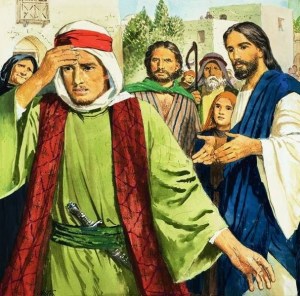
Jesus is teaching them that.  But they aren’t getting it.

Then we see in the second portion James and John trying to wiggle their way into being the greatest in the kingdom.  And Jesus says, (paraphrasing) guys, you are missing the point here.

Your life, your greatness, it doesn’t come from power or prestige or titles.  It comes from serving.  The Son of Man came not to be served, but to serve.  That is the path He walks.  And that is path that He calls us to walk.

Serve. We are not like the world.  It is “not so among us.”  We’ve got to be different.  The only way that we change the world is to be different.  The only way that we can make a difference in the hardened hearts of this world is through service.  To love God and love our neighbor.

That’s what Jesus calls us to.  That’s the path to greatness for us a Christians.  Not in power.  But in service.

Today, and in this soon to be Advent season, may we live out that love of God.  May we serve.

Monday we’ll look at Mark 10:46-52.

What questions do you have?  How does this strike you?  Shoot me an email, comment below, or connect with me through social media.

If you’d like to receive these thoughts by email, be sure to click here and join my email devotional group!

Day Thirty-Eight with Mark: Mark 10:17-31

Today in Mark we look at Mark 17-31:

17 As he was setting out on a journey, a man ran up and knelt before him, and asked him, “Good Teacher, what must I do to inherit eternal life?” 18 Jesus said to him, “Why do you call me good? No one is good but God alone. 19 You know the commandments: ‘You shall not murder; You shall not commit adultery; You shall not steal; You shall not bear false witness; You shall not defraud; Honor your father and mother.’” 20 He said to him, “Teacher, I have kept all these since my youth.” 21 Jesus, looking at him, loved him and said, “You lack one thing; go, sell what you own, and give the money to the poor, and you will have treasure in heaven; then come, follow me.” 22 When he heard this, he was shocked and went away grieving, for he had many possessions.

23 Then Jesus looked around and said to his disciples, “How hard it will be for those who have wealth to enter the kingdom of God!” 24 And the disciples were perplexed at these words. But Jesus said to them again, “Children, how hard it is to enter the kingdom of God! 25 It is easier for a camel to go through the eye of a needle than for someone who is rich to enter the kingdom of God.” 26 They were greatly astounded and said to one another, “Then who can be saved?” 27 Jesus looked at them and said, “For mortals it is impossible, but not for God; for God all things are possible.”

28 Peter began to say to him, “Look, we have left everything and followed you.” 29 Jesus said, “Truly I tell you, there is no one who has left house or brothers or sisters or mother or father or children or fields, for my sake and for the sake of the good news, 30 who will not receive a hundredfold now in this age—houses, brothers and sisters, mothers and children, and fields, with persecutions—and in the age to come eternal life. 31 But many who are first will be last, and the last will be first.”

This is another one of those passages that have a lot going on it in it.  Let’s break down what’s happening

richyoungrulerFirst, we see the rich young man.  Here’s the take away from him.  He was arrogant and thought he had it all together.  He was coming to Jesus for affirmation more than for instruction.  He thought he had all the answers already.

How do we know this?  When Jesus tells him the commandments, he says, I’ve done all this.  We also see this in Jesus initial greeting to him, when the man calls Jesus good, Jesus reframes it, saying no one is good but God.  And then youth man basically says – nope, I’m good too!  This young man things He has it all together and everything is great.  And he’s missing the point.

Because next we see Jesus’ response.  He loved him.  He wasn’t mad at him.  Jesus wasn’t trying to punish him.  He was trying to set him free.  His “stuff” had trapped him and made him a prisoner.  Jesus was trying to set him free for real life, because He loved him.  But Jesus’ words weren’t what the man wanted to hear.  Or what the disciples.  wanted to hear.

See because in that culture,  wealth = blessing.  So, if this rich man lacked what was needed to get into heaven, then who could get in?  If he couldn’t make it, then what chance did a regular person have.  We see Peter ask this, Lord, what about us?  We’ve left everything to follow you.

And Jesus says, and you’ve found true life.  True life is in following God.  Not in following the world or following power or privilege or anything like.  True life is in following Jesus.  Even if it costs, it gives you life.

Because He is life. And if we “lose” something to follow, we actually gain.  Because we gain life.

Today, may we seek after true life.  May we seek after Jesus.

Friday we’ll look at Mark 10:32-44.

What questions do you have?  How does this strike you?  Shoot me an email, comment below, or connect with me through social media.

If you’d like to receive these thoughts by email, be sure to click here and join my email devotional group!