Day Forty-Eight with Mark: Mark 12:28-34

Today we look at Mark 12:28-34:

28 One of the scribes came near and heard them disputing with one another, and seeing that he answered them well, he asked him, “Which commandment is the first of all?” 29 Jesus answered, “The first is, ‘Hear, O Israel: the Lord our God, the Lord is one; 30 you shall love the Lord your God with all your heart, and with all your soul, and with all your mind, and with all your strength.’ 31 The second is this, ‘You shall love your neighbor as yourself.’ There is no other commandment greater than these.” 32 Then the scribe said to him, “You are right, Teacher; you have truly said that ‘he is one, and besides him there is no other’; 33 and ‘to love him with all the heart, and with all the understanding, and with all the strength,’ and ‘to love one’s neighbor as oneself,’—this is much more important than all whole burnt offerings and sacrifices.” 34 When Jesus saw that he answered wisely, he said to him, “You are not far from the kingdom of God.” After that no one dared to ask him any question.
24737_24737_8For once, we get someone asking Jesus a legitimate question.  This scribe isn’t coming to test or trick Jesus, he is coming to ask him a real question about belief and what is right.

His question, for a religious leader of the day, would be the most important question that could be asked.  What is the greatest commandment?

The reason why this is such a pressing issue for these religious leaders is because so much of their faith, their understanding and relationship to God is tied up in the commandments.  Those commandments handed to them by God through the Law, and those commandments that religious leaders came up with help them live under their understanding of the Law.

Notice I said to live under their understanding of the Law, not the actual Law.  So much of the Law keeping of Jesus’ day was an additional burden placed upon the backs of people that was never God’s plan or design.

So the question is asked, what is most important.  And Jesus says this.  Of all the things that could be important, Jesus says the most important command is this.  Love.

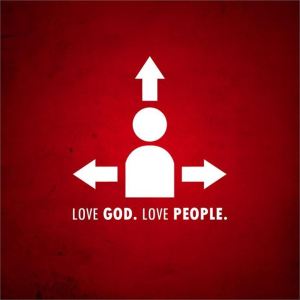
Love God.

Love neighbor.

Love yourself.

Love.  Love is the height of the Law.  Love is the purpose of the law.  Love is what it all comes down to.  We are called to love God. That means personally, through our own devotional life, as well as publicly, through acts of worship.

We are called to love our neighbor personally, through acts of charity, as well as publicly, gathering together with others to work for the good of others.

And we are called to love ourselves.  You are precious.  You are loved.  You really can’t properly love anyone until you realize that you are worthy of love yourself.

Love of God, love of neighbor, love of self.  This is the height of the law.  May we good law keepers today.  May we love.

Friday we’ll look at Mark 12:35-44.

What questions do you have?  How does this strike you?  Shoot me an email, comment below, or connect with me through social media.

If you’d like to receive these thoughts by email, be sure to click here and join my email devotional group!

How Are You Loving?

One of the things I really like about faith is that God is the “first actor.”

What does that mean?  What that means is that everything starts with God.  He is the one that starts the ball in motion, He is the one that starts everything.

Creation started with Him.

The plan of salvation started with Him.

Everything started with Him.

Today, we read in 1 John, even the fact that we love God, and love other people, that started with God as well:

We love because he first loved us. Those who say, “I love God,” and hate their brothers or sisters, are liars; for those who do not love a brother or sister whom they have seen, cannot love God whom they have not seen. The commandment we have from him is this: those who love God must love their brothers and sisters also.

We love, because we are first loved.  We love God, and others, because God first loved us. The love of God makes possible our love for everyone else in all our lives. He is the one that started it all. And it is all possible because He has first loved us.

And since God starts everything, the question is then asked. What is our response? Since it all begins with God, what are we to do next?  What is our response?

The text today says not only that God first loved us, but if we claim that we love God, but hate our neighbor, we really can’t love God.  How can we claim to love God, who is unseen, yet hate our neighbor, who we do see.

So, I believe, that this text teaches us that our love for God is seen in the way that we love each other.  I can talk all day long about how much I love God.  How faithful I am to God. How great God is in my life.

But, what is my life showing?  How much is my life saying that I love God?  What is my love for the people in my life saying about my love for God?

God has first loved us.  God has given us His love.  What is our response to that?  If God’s love is in us, we will love others.

Today, how are you loving?

Humility

Humility can be a dirty word.

Or if not a dirty word, it can be a word that we don’t like or aren’t really fond of.  When we think of humility, we aren’t really sure what it means to be humble.  The one thing we may think about humility is this.

We are supposed to think that we don’t matter. We are supposed to think that we are unimportant. We are supposed to think that we have no great value.

That is not right. That is not humility.

You do matter.  You are important.  You are of great worth.

Humility is not beating up on yourself.  Humility is not putting down on yourself.  Humility is not about debasing yourself of thinking yourself worthless.

I had a professor in seminary that used to put it this way – “Humility is self-forgetfulness.”  It’s not about beating yourself up. It’s about forgetting about yourself and thinking of others first.

Listen to what Paul writes in Philippians today:

Don’t be selfish; don’t try to impress others. Be humble, thinking of others as better than yourselves. Don’t look out only for your own interests, but take an interest in others, too.

Paul says, think about others first. Think of their needs. Their of their feelings. Think of them before we think of ourselves.

We forget about ourselves and focus on them.  How we can help others.  Love others. Serve others.

Why?

Why should we do that? Why are we called to do that.

Well, as Christians, we are called to seek to be like Christ.  To know Him. To love Him. And to love others as He did.  And listen as Paul continues, to what Jesus did:

You must have the same attitude that Christ Jesus had.
Though he was God,
he did not think of equality with God
as something to cling to.
Instead, he gave up his divine privileges;
he took the humble position of a slave
and was born as a human being.
When he appeared in human form,
he humbled himself in obedience to God
and died a criminal’s death on a cross.

Jesus was humble.  Jesus came not for Himself, but for us. And as Christians, He calls us not to live just for ourselves, but to live for others.

Because in a life of humility, a life of service, a life of giving ourselves away for His sake, we find more life that we’ll ever find in living for ourselves.

Yes, we are called to be humble.  No humility is not what we’ve always thought that is was.  Humility is about forgetting about ourselves and focusing on others.

Today, and each day, may we be humble.

Who is Your Neighbor?

We are told to love our neighbor.  It’s a biblical command. It’s one of foundations of the great commandment.

We are to love our neighbor.

But, as we are going to read this morning, there is a question.  Who is my neighbor?  Who am I to love? What does loving that neighbor look like? What should we be doing?

Listen to this story Jesus told, one you’ve heard a million times. But, listen to again.  Stop, breathe, and listen.  As if you are listening for the first time.

Jesus replied with a story: “A Jewish man was traveling on a trip from Jerusalem to Jericho, and he was attacked by bandits. They stripped him of his clothes, beat him up, and left him half dead beside the road. “By chance a priest came along. But when he saw the man lying there, he crossed to the other side of the road and passed him by. A Temple assistant walked over and looked at him lying there, but he also passed by on the other side. “Then a despised Samaritan came along, and when he saw the man, he felt compassion for him. Going over to him, the Samaritan soothed his wounds with olive oil and wine and bandaged them. Then he put the man on his own donkey and took him to an inn, where he took care of him. The next day he handed the innkeeper two silver coins, telling him, ‘Take care of this man. If his bill runs higher than this, I’ll pay you the next time I’m here.’ “Now which of these three would you say was a neighbor to the man who was attacked by bandits?” Jesus asked. The man replied, “The one who showed him mercy.” Then Jesus said, “Yes, now go and do the same.”

You’ve heard many sermons on this, read many devotionals on this, I’m sure. There are so many points to notice, so many things been said of importance, so many concepts here that can change our walk with God and with each other.

But today, notice the neighbor was not someone who the Samaritan even knew.  It was a stranger who was in need.  It was a man, simply in need, that he had passed by.

And he stopped to help.

Today, who is your neighbor? Maybe it’s the coworker that is having a bad day.

Maybe it’s the classmate that just failed that test.

Maybe it’s your spouse who you had an argument with.

Maybe it’s your elderly parent.

Maybe is just a guy or gal on the street with a long face.

Today, in your life, there will be someone who is need of some sort. Don’t be blind to it.  The hard part is not that there aren’t neighbors in need all around us.  The hard part is slowing ourselves down long enough to see.

Today, look.  Listen.  Pray. Seek.  Who is your neighbor?  Who is the one in you life, or in your path, that needs the grace that you can give?

Who is you neighbor?  The text says show them mercy.  May we go and do likewise.

Not Complicated. Just Hard

One of my professors, Dr. Harold Bryson, at Mississippi College used to say that Jesus isn’t hard to understand.  He’s just hard to follow.

He was telling us that the things that Jesus calls us to do are not complicated.  They are just hard to do.  It’s not complicated to love your enemies.  It’s not complicated to forgive those that hurt you. It’s not to hunger and thirst for righteousness.

They are just hard to do.

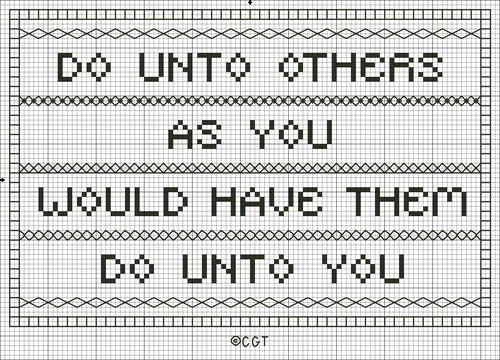
This week as we continue to reflect upon verses that deal with our love for our neighbor, listen to what Jesus tells us in Matthew 7:12:

“Do to others whatever you would like them to do to you. This is the essence of all that is taught in the law and the prophets.

Ah, the golden rule.  He even says, this is the essence of all that’s taught in the Old Testament (the law and prophets).  This rule actually sums it up for us. It actually makes it easier for us.  It simplifies it for us.  It’s not complicated.

It’s so easy to understand, we can very easily teach it to our children. And it makes sense.  We know its good for us to live by the golden rule.  We know it simplifies things. We know that in doing that, we living life that’s going to be more peaceful, more productive, and better for us all.

We know this.

But, it can still be hard. There are just some folks we don’t want to be nice to.  Some folks that don’t deserve our niceness. Some folks that it’s hard to “do unto others” to.

Because we know they won’t do the same to us.  We know they aren’t going to respond to our offer of grace with grace.

But, here’s the catch. We aren’t called to live their life. We are called to live our lives.  No matter how “they” choose to respond, we must offer grace. Because that’s what God wants us to do. And it’s the way we find peace in our lives.

In the end, it’s not even about “them.”  It’s about “us.” And in offering “them” grace, we find peace.

So, today, do unto others as you would have them do unto you. It’s not complicated.  it’s just hard.  But, God will give us the grace to do it. And in it, we will find His life for us.