Day Forty-Eight with Mark: Mark 12:28-34

Today we look at Mark 12:28-34:

28 One of the scribes came near and heard them disputing with one another, and seeing that he answered them well, he asked him, “Which commandment is the first of all?” 29 Jesus answered, “The first is, ‘Hear, O Israel: the Lord our God, the Lord is one; 30 you shall love the Lord your God with all your heart, and with all your soul, and with all your mind, and with all your strength.’ 31 The second is this, ‘You shall love your neighbor as yourself.’ There is no other commandment greater than these.” 32 Then the scribe said to him, “You are right, Teacher; you have truly said that ‘he is one, and besides him there is no other’; 33 and ‘to love him with all the heart, and with all the understanding, and with all the strength,’ and ‘to love one’s neighbor as oneself,’—this is much more important than all whole burnt offerings and sacrifices.” 34 When Jesus saw that he answered wisely, he said to him, “You are not far from the kingdom of God.” After that no one dared to ask him any question.
24737_24737_8For once, we get someone asking Jesus a legitimate question.  This scribe isn’t coming to test or trick Jesus, he is coming to ask him a real question about belief and what is right.

His question, for a religious leader of the day, would be the most important question that could be asked.  What is the greatest commandment?

The reason why this is such a pressing issue for these religious leaders is because so much of their faith, their understanding and relationship to God is tied up in the commandments.  Those commandments handed to them by God through the Law, and those commandments that religious leaders came up with help them live under their understanding of the Law.

Notice I said to live under their understanding of the Law, not the actual Law.  So much of the Law keeping of Jesus’ day was an additional burden placed upon the backs of people that was never God’s plan or design.

So the question is asked, what is most important.  And Jesus says this.  Of all the things that could be important, Jesus says the most important command is this.  Love.

Love God.

Love neighbor.

Love yourself.

Love.  Love is the height of the Law.  Love is the purpose of the law.  Love is what it all comes down to.  We are called to love God. That means personally, through our own devotional life, as well as publicly, through acts of worship.

We are called to love our neighbor personally, through acts of charity, as well as publicly, gathering together with others to work for the good of others.

And we are called to love ourselves.  You are precious.  You are loved.  You really can’t properly love anyone until you realize that you are worthy of love yourself.

Love of God, love of neighbor, love of self.  This is the height of the law.  May we good law keepers today.  May we love.

Friday we’ll look at Mark 12:35-44.

What questions do you have?  How does this strike you?  Shoot me an email, comment below, or connect with me through social media.

If you’d like to receive these thoughts by email, be sure to click here and join my email devotional group!

How Are You Loving?

One of the things I really like about faith is that God is the “first actor.”

What does that mean?  What that means is that everything starts with God.  He is the one that starts the ball in motion, He is the one that starts everything.

Creation started with Him.

The plan of salvation started with Him.

Everything started with Him.

Today, we read in 1 John, even the fact that we love God, and love other people, that started with God as well:

We love because he first loved us. Those who say, “I love God,” and hate their brothers or sisters, are liars; for those who do not love a brother or sister whom they have seen, cannot love God whom they have not seen. The commandment we have from him is this: those who love God must love their brothers and sisters also.

We love, because we are first loved.  We love God, and others, because God first loved us. The love of God makes possible our love for everyone else in all our lives. He is the one that started it all. And it is all possible because He has first loved us.

And since God starts everything, the question is then asked. What is our response? Since it all begins with God, what are we to do next?  What is our response?

The text today says not only that God first loved us, but if we claim that we love God, but hate our neighbor, we really can’t love God.  How can we claim to love God, who is unseen, yet hate our neighbor, who we do see.

So, I believe, that this text teaches us that our love for God is seen in the way that we love each other.  I can talk all day long about how much I love God.  How faithful I am to God. How great God is in my life.

But, what is my life showing?  How much is my life saying that I love God?  What is my love for the people in my life saying about my love for God?

God has first loved us.  God has given us His love.  What is our response to that?  If God’s love is in us, we will love others.

Today, how are you loving?

The Table

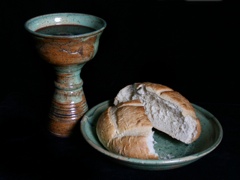
One of my favorite parts of being a preacher is serving communion.  It really is.  It’s something I look forward to doing, something I look forward sharing in, something that really adds to my faith and my love of God.

Communion is a very powerful thing. It is something that when the Body of Christ does it, we know that God is in our midst and is drawing us closer to Himself.

This week, each day’s readings have been taken from scriptures that were listed in the bulletin at Asbury this past Sunday.  You can click here to see that bulletin.  Each of the passages talk about practices of faith that grow our love of God. So far this week we’ve reflected on scripture and on prayer.

Today, it’s communion.  Listen to Acts 2:42 and what happened in the early church:

All the believers devoted themselves to the apostles’ teaching, and to fellowship, and to sharing in meals (including the Lord’s Supper), and to prayer.

In the earliest of days in the church they gathered for the teaching, the preaching, the fellowship, and the table.  At this table, Christians came together to remember what happened when our Lord was betrayed and crucified, but they also looked forward to a time when they would gather together with Jesus around the table at the wedding feast that is eternal life in heaven.

At this table, we are all equal.  We are all equal in our need for God, and equal in our hope of resurrection and eternal life.  At the table, we remember what He did for our sake and for our forgiveness and we look forward to a time of everlasting peace.

At the table, we are reminded we are forgiven, we are loved, and we are welcomed.

None of us deserve to come to the table. But, ALL are welcomed to come to the table. That’s what grace is all about.

Grace is about knowing that you aren’t worthy, but are invited anyway. That’s the grace God gives to us in the table of Communion, and the grace He gives us each day.

You aren’t worthy.  Neither am I.  None of us are. But, we are each loved. And welcomed. And treasured. Through God’s grace.

Remember what He did for our sake. And look forward to what will be. And live in the power of God’s amazing grace.