What I’ve Seen Today

I can’t sleep.  It’s Sunday night.  Normally I’m exhausted after a long day of worship, visiting with folks, meetings, and chasing the kids.

I can’t sleep tonight. So, I do what I do when I can’t sleep. I write.

I can’t sleep tonight because of what I’ve seen today.  I’ve seen something amazing today.  I’ve seen God at work.

I’ve been lucky enough to have served God in ministry since 1998.  I’ve been under appointment (i.e. a preacher) since 1999.  I’ve had the great privilege and honor of serving some amazing people and churches in these years.  At Boyle, Linn, and Litton UMCs, those sweet folk taught me how to grow up and be a pastor. At Coy UMC, I found my voice and learned how to preach. At Ripley FUMC, I had the honor of seeing what can happen when a church really tries to impact its community.

I’ve been lucky to serve some great people.
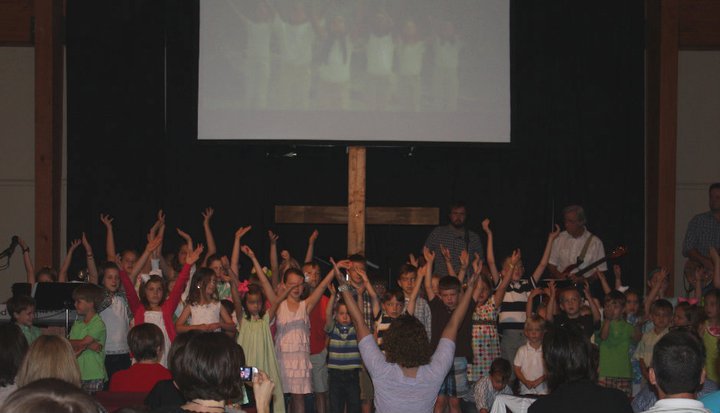
Today, though, I can’t sleep. Because I saw God at work here at Asbury Church.  I saw Him in our children as they led us in worship.  I saw Him in the praise team as they communicated the grace and mercy of God through song.  I saw Him in a line for lunch that literally stretched out of the worship center. I saw Him in the laughter and joy of those same folks waiting in line to eat.  I saw Him the hands of folks working the kitchen as they served a teeming mass of people lunch. I saw Him in the fact that so many people, people I literally didn’t know stayed after worship to fellowship, to laugh, to just be together as the Body of Christ. I saw Him in children running to get Easter Eggs and sliding down slides.  I saw Him in the youth gather back tonight, eating crawfish listening to music and enjoying the company of fellow sisters and brothers in Christ.

There’s an old song my wife used to sing some in church – “There’s a Sweet, Sweet Spirit in This Place.” Today, I saw the effect of that spirit.  I saw God move in the lives of people. I saw people draw close to God and close to each other.

I saw God move in church today. And I am so thankful that my eyes have gotten to see it.

And I can’t wait until next week to see what He’s going to do here at Asbury.

I can’t sleep tonight. And I’ve never been more happy about it.

Who is Your Neighbor?

We are told to love our neighbor.  It’s a biblical command. It’s one of foundations of the great commandment.

We are to love our neighbor.

But, as we are going to read this morning, there is a question.  Who is my neighbor?  Who am I to love? What does loving that neighbor look like? What should we be doing?

Listen to this story Jesus told, one you’ve heard a million times. But, listen to again.  Stop, breathe, and listen.  As if you are listening for the first time.

Jesus replied with a story: “A Jewish man was traveling on a trip from Jerusalem to Jericho, and he was attacked by bandits. They stripped him of his clothes, beat him up, and left him half dead beside the road. “By chance a priest came along. But when he saw the man lying there, he crossed to the other side of the road and passed him by. A Temple assistant walked over and looked at him lying there, but he also passed by on the other side. “Then a despised Samaritan came along, and when he saw the man, he felt compassion for him. Going over to him, the Samaritan soothed his wounds with olive oil and wine and bandaged them. Then he put the man on his own donkey and took him to an inn, where he took care of him. The next day he handed the innkeeper two silver coins, telling him, ‘Take care of this man. If his bill runs higher than this, I’ll pay you the next time I’m here.’ “Now which of these three would you say was a neighbor to the man who was attacked by bandits?” Jesus asked. The man replied, “The one who showed him mercy.” Then Jesus said, “Yes, now go and do the same.”

You’ve heard many sermons on this, read many devotionals on this, I’m sure. There are so many points to notice, so many things been said of importance, so many concepts here that can change our walk with God and with each other.

But today, notice the neighbor was not someone who the Samaritan even knew.  It was a stranger who was in need.  It was a man, simply in need, that he had passed by.

And he stopped to help.

Today, who is your neighbor? Maybe it’s the coworker that is having a bad day.

Maybe it’s the classmate that just failed that test.

Maybe it’s your spouse who you had an argument with.

Maybe it’s your elderly parent.

Maybe is just a guy or gal on the street with a long face.

Today, in your life, there will be someone who is need of some sort. Don’t be blind to it.  The hard part is not that there aren’t neighbors in need all around us.  The hard part is slowing ourselves down long enough to see.

Today, look.  Listen.  Pray. Seek.  Who is your neighbor?  Who is the one in you life, or in your path, that needs the grace that you can give?

Who is you neighbor?  The text says show them mercy.  May we go and do likewise.

Not Complicated. Just Hard

One of my professors, Dr. Harold Bryson, at Mississippi College used to say that Jesus isn’t hard to understand.  He’s just hard to follow.

He was telling us that the things that Jesus calls us to do are not complicated.  They are just hard to do.  It’s not complicated to love your enemies.  It’s not complicated to forgive those that hurt you. It’s not to hunger and thirst for righteousness.

They are just hard to do.

This week as we continue to reflect upon verses that deal with our love for our neighbor, listen to what Jesus tells us in Matthew 7:12:

“Do to others whatever you would like them to do to you. This is the essence of all that is taught in the law and the prophets.

Ah, the golden rule.  He even says, this is the essence of all that’s taught in the Old Testament (the law and prophets).  This rule actually sums it up for us. It actually makes it easier for us.  It simplifies it for us.  It’s not complicated.

It’s so easy to understand, we can very easily teach it to our children. And it makes sense.  We know its good for us to live by the golden rule.  We know it simplifies things. We know that in doing that, we living life that’s going to be more peaceful, more productive, and better for us all.

We know this.

But, it can still be hard. There are just some folks we don’t want to be nice to.  Some folks that don’t deserve our niceness. Some folks that it’s hard to “do unto others” to.

Because we know they won’t do the same to us.  We know they aren’t going to respond to our offer of grace with grace.

But, here’s the catch. We aren’t called to live their life. We are called to live our lives.  No matter how “they” choose to respond, we must offer grace. Because that’s what God wants us to do. And it’s the way we find peace in our lives.

In the end, it’s not even about “them.”  It’s about “us.” And in offering “them” grace, we find peace.

So, today, do unto others as you would have them do unto you. It’s not complicated.  it’s just hard.  But, God will give us the grace to do it. And in it, we will find His life for us.


At the Foot of the Cross

Our praise team at Asbury sang a song I just love yesterday.  I’ll have to confess it’s a song that I had never heard of before until recently. It’s called “At the Foot of the Cross.”

The basic theme of the song is that we are all equal there at the foot of the cross. No matter what we’ve done, who we are, what we bring to it, we are all equal.  Equal in our sin, equal in our need for grace, and equal in the eyes of God.

And we are all equally loved by God there at the foot of the cross.

Last week in our reflections we talked about “loving God.”  This week we are talking about the Biblical command to “love neighbor.”  And as I was reading a passage today in Proverbs that related back to love of neighbor, I thought about that song.  Listen to what Proverbs 29:7 says:

The godly care about the rights of the poor;
the wicked don’t care at all.

The Godly care about the needs of the poor.  Why?  That sounds nice to say that the godly care about the poor, but why? Why do they and why should they?

Because we are all equal a the foot of the cross.  Rich or poor, doesn’t matter.  Young or old, doesn’t mater.  Black or white, doesn’t matter. Male of female, doesn’t matter. We are all equal at the foot of cross.

So, we care about others, because God cares about them. And we are called to be like He is.

Today, may we care for all the folks in our lives, may we love all the folks in our lives. And may we try to point all the folks in our lives to the power and grace of Jesus Christ.

Because all are equal at the foot of the cross.  No matter what.

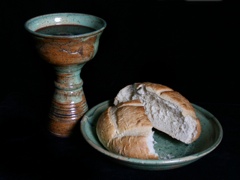
The Table

One of my favorite parts of being a preacher is serving communion.  It really is.  It’s something I look forward to doing, something I look forward sharing in, something that really adds to my faith and my love of God.

Communion is a very powerful thing. It is something that when the Body of Christ does it, we know that God is in our midst and is drawing us closer to Himself.

This week, each day’s readings have been taken from scriptures that were listed in the bulletin at Asbury this past Sunday.  You can click here to see that bulletin.  Each of the passages talk about practices of faith that grow our love of God. So far this week we’ve reflected on scripture and on prayer.

Today, it’s communion.  Listen to Acts 2:42 and what happened in the early church:

All the believers devoted themselves to the apostles’ teaching, and to fellowship, and to sharing in meals (including the Lord’s Supper), and to prayer.

In the earliest of days in the church they gathered for the teaching, the preaching, the fellowship, and the table.  At this table, Christians came together to remember what happened when our Lord was betrayed and crucified, but they also looked forward to a time when they would gather together with Jesus around the table at the wedding feast that is eternal life in heaven.

At this table, we are all equal.  We are all equal in our need for God, and equal in our hope of resurrection and eternal life.  At the table, we remember what He did for our sake and for our forgiveness and we look forward to a time of everlasting peace.

At the table, we are reminded we are forgiven, we are loved, and we are welcomed.

None of us deserve to come to the table. But, ALL are welcomed to come to the table. That’s what grace is all about.

Grace is about knowing that you aren’t worthy, but are invited anyway. That’s the grace God gives to us in the table of Communion, and the grace He gives us each day.

You aren’t worthy.  Neither am I.  None of us are. But, we are each loved. And welcomed. And treasured. Through God’s grace.

Remember what He did for our sake. And look forward to what will be. And live in the power of God’s amazing grace.


What’s Next Podcast

The sermon podcast for April 3, 2011 is up on Asbury Church’s website. It’s the fourth  in our series “Back to Basics.” It’s entitled “What’s Next” and the text is Matthew 22: 34-40.  You can listen to it by clicking here, or you can listen to it here on this blog by clicking below. And, as always, you can subscribe to my sermon podcasts through iTunes.


Why Its Called Grace

You can’t make God love you.  You can’t.

I’ve said this before in sermons at Asbury, so of you may have heard this statement before and know where I’m going with this, but let me say it again.

You can’t make God love you.

If you are living your life doing all that you can do to earn God’s love, you will never earn it and you will live your life trying to earn something that simply cannot be earned.

You can’t make God love you.

You don’t have to.  He simply loves you.  NO.  MATTER.  WHAT.

Listen to what Paul tell us in Romans 5 today:

When we were utterly helpless, Christ came at just the right time and died for us sinners. Now, most people would not be willing to die for an upright person, though someone might perhaps be willing to die for a person who is especially good. But God showed his great love for us by sending Christ to die for us while we were still sinners.

Christ died for us not because we deserved it or had earned that grace and forgiveness.  In fact, He did it for the exact opposite reason.  He did it because we couldn’t.  He gave us grace because we couldn’t earn it.

You don’t need to live your life trying to earn God’s love.  You need to live your life as a response to God that loves you more than you would ever think possible.

You don’t need to make God love you. He already does.  You don’t have to earn God’s love.  It’s already given.  That’s why it’s called grace.  It’s not earned.  It’s not deserved.  It’s a free gift from an amazing God.

Today, you are loved.  Know that.  Believe that.  Live in that.  You are loved.  Today.

Live in the depth of God’s grace.  And in that, you’ll find life worth living.

God’s Response Podcast

The sermon podcast for March 20, 2011 is up on Asbury Church’s website. It’s the second  in our series “Back to Basics.” It’s entitled “God’s Response” and the text is Jeremiah 31: 31-34.  You can listen to it by clicking here, or you can listen to it here on this blog by clicking below. And, as always, you can subscribe to my sermon podcasts through iTunes.

A Change is Coming

Saul was a bad dude. Really, he was a bad dude.

He persecuted the church. He was present at the stoning of Stephen, the first Christian martyr. He was out to do as much as he could do to destroy the church and destroy the movement of God.

Listen to what is said of Saul in Acts 9:

Meanwhile, Saul was uttering threats with every breath and was eager to kill the Lord’s followers.

Paul was determined to stop this new movement of Christianity.

So, Acts 9 tells us how he sets out to go to Damascus to destroy what was happening. It tells how he was going to drag the Christians back to Jerusalem and see them persecuted. He is out to stop this. And he will not be stopped in his mission of destruction.

Except for what happens later in chapter 9

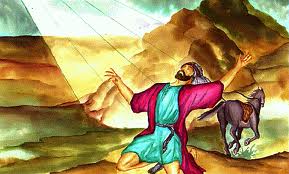
As he was approaching Damascus on this mission, a light from heaven suddenly shone down around him. He fell to the ground and heard a voice saying to him, “Saul! Saul! Why are you persecuting me?” “Who are you, lord?” Saul asked. And the voice replied, “I am Jesus, the one you are persecuting! Now get up and go into the city, and you will be told what you must do.”

He has his plan. But the Lord has a different plan. Not only is His plan to stop Saul from doing what he was going to do. His plan was to change Saul.

He was going to change Saul the persecutor into Paul the Apostle. He was going to take the one that was trying to kill the church and change him into the one who was going to spread the good news of Jesus Christ across the world.

He was going to change Saul and use Saul for His glory.

He will do the same for you. A change is coming. You don’t have to be like you’ve always been. A change is coming.

God has a plan for you. God has a vision for you. God wants to use you.

If He can use Saul for amazing things, He can use you for amazing things.

A change is coming. Believe it. Live it. Cling to it. God is at work. He will change you.

Today, may we let Him do His work in our lives.

A change is coming. May we know the power of the change of God.

Not Just Judas

One of the things we forget about the night of the crucifixion of Jesus was that Judas wasn’t the only one that betrayed Jesus.

He wasn’t the only one that denied Him and turned his back upon Jesus.

Peter did too.

That Peter?  Yes. That Peter.

Read what happens in Luke 22

61 The Lord turned and looked at Peter. Then Peter remembered the word of the Lord, how he had said to him, ‘Before the cock crows today, you will deny me three times.’ 62 And he went out and wept bitterly.

As Jesus stood before trial, three times Peter was asked if he knew Jesus and three times he denied Jesus.

Three times he had the chance to stand for Jesus, to stand with Jesus, to show his loyalty to Jesus, and three times he denied Jesus.

It wasn’t just Judas that betrayed Jesus. Peter did too.

And yet, Jesus still used Peter for amazing things, while Judas ended his life soon after.

Why?

What made the difference.

Now, as I tell my people all the time, this is my opinion and my opinion and a $1.50 will get you a cup of coffee.  But, perhaps what separated Judas from Peter wasn’t the forgiveness of Jesus. It was this.  Peter could forgive himself.  Judas couldn’t.

Today, you can forgive yourself.  God has forgiven you.  You can forgive yourself.

Peter, in spite of his denial, was able to forgive himself and be used by God in amazing ways.

The same is true for you.

Today, you can forgive yourself.  God has forgiven you.  You can forgive yourself.

Today, may we each know the power of forgiveness.