Day Thirty-Three with Mark: Mark 8:22-26

Today in Mark we look at Mark 8:22-26:

Jesus Cures a Blind Man at Bethsaida
22 They came to Bethsaida. Some people brought a blind man to him and begged him to touch him. 23 He took the blind man by the hand and led him out of the village; and when he had put saliva on his eyes and laid his hands on him, he asked him, “Can you see anything?” 24 And the man looked up and said, “I can see people, but they look like trees, walking.” 25 Then Jesus laid his hands on his eyes again; and he looked intently and his sight was restored, and he saw everything clearly. 26 Then he sent him away to his home, saying, “Do not even go into the village.”

This is the second time we see Jesus heal someone by using spit or saliva.  We talked a good bit in the day about why Jesus chose to use saliva as an instrument of healing.  I think there is much to be said about the notion of Jesus using “modern” understandings of medicine for other’s benefit as well the notion that He is showing illness and disease who is really in control.

But here is the thing that is significant about this text to me.  Notice Jesus takes the man out of town to heal him and then after the healing tells him to not even go back into the town.  Why?  Why did Jesus do this great act in private?  Many of His other miracles, particularly early in His ministry were done in public so everyone could see.

Now, this is in private with the express directions to not ever go into town and tell others.  Why?

Imperial-Crown-IndiaWell, the people of Jesus day were looking for a Messiah. They were looking for a savior. They were looking for a King from the line of David.  In fact at times some people will even call Him the Son of David.  What is happening here is they are saying yes, you are the one that is to come from David’s line.

You will be a king just like David!

And for the people, David was the greatest earthly king the people had ever had.  He was it.  He was the icon of what a king should be.  All other kings would measure up against him.  And when that promised king from David’s line would come, he would drive out their oppressors.  He would restore the fortunes of Israel and make them great again.

He would restore the kingdom.

But, as Jesus tells us, His kingdom is not of this world.  Yes, He is a king, but it is not of an earthly kingdom.  It is a heavenly kingdom.

So why did Jesus do this in private and tell others not to tell.  Because they didn’t understand the kingdom Jesus was going to bring.  So He did these healings in secret.  He did them in private.  Because they didn’t understand the kingdom Jesus was coming to bring.

We will see tomorrow, that even His closest disciples didn’t get it just yet.

So, when I read these stories, the question I always have to ask myself is this. What do I do when Jesus isn’t what I expect Him to be?  What do I do when Jesus’ plan, His will, His purpose aren’t what I would have done myself?

Do I buck Him?  Or do I trust?  That’s always the question.  What do we do when Jesus doesn’t do what we expect.

Today, and each day, may we learn to trust.

Tomorrow we’ll look at Mark 8:27-38.

What questions do you have?  How does this strike you?  Shoot me an email, comment below, or connect with me through social media.

If you’d like to receive these thoughts by email, be sure to click here and join my email devotional group!

Day Thirty-Two with Mark: Mark 8:11-12

Today we look some of the doubters Jesus had to deal with in Mark 8:11-12:

The Demand for a Sign
11 The Pharisees came and began to argue with him, asking him for a sign from heaven, to test him. 12 And he sighed deeply in his spirit and said, “Why does this generation ask for a sign? Truly I tell you, no sign will be given to this generation.”

faithI love certain words in scripture. I love how they jump out, how they explode, how the just kind of hang there.  Today for me in this reading that word, or that phrase was “He sighed deeply in His spirit.”

Jesus has literally just feed thousands of people twice.  He has healed Jews and Gentiles across the land.  People are flocking from all over to hear Him preach and to just perhaps touch the fringe of His robe that they may be healed.

Miracles are literally, not figuratively, literally happening everywhere.

And the Pharisees come, asking for a sign.  And He sighed.  Why?

Because what more signs could He produce.  Short of His death and resurrection, which was going to happen, and which they didn’t believe either, what could He do?  So He sighed.  Was is frustration?  Was it exasperation?  Was it just exhaustion?  We don’t know, but we know they He knew they wouldn’t get it. They wouldn’t see, no matter how many signs He did.

Why?  Why wouldn’t they see the signs?  Because they didn’t believe.

When we believe, we see. When we have faith, we see miracles everywhere, every day.  When faith enlivens the eyes, we see the signs of God, of faith, of miracles every day.

When we do not, we do not. When we do not see through faith, we will look, but never see. When we look though, through the eyes of faith, we see them everywhere.

Today, do you see?  God is work. Jesus is doing great things.  It is happening everywhere.

It is.  We can see it.

We just have to look right.  We just have to look through the eyes of faith.

Today, do you see?

Monday we’ll look at Mark 8:14-21.

What questions do you have?  How does this strike you?  Shoot me an email, comment below, or connect with me through social media.

If you’d like to receive these thoughts by email, be sure to click here and join my email devotional group!
Day Thirty-One with Mark: Mark 8:1-10

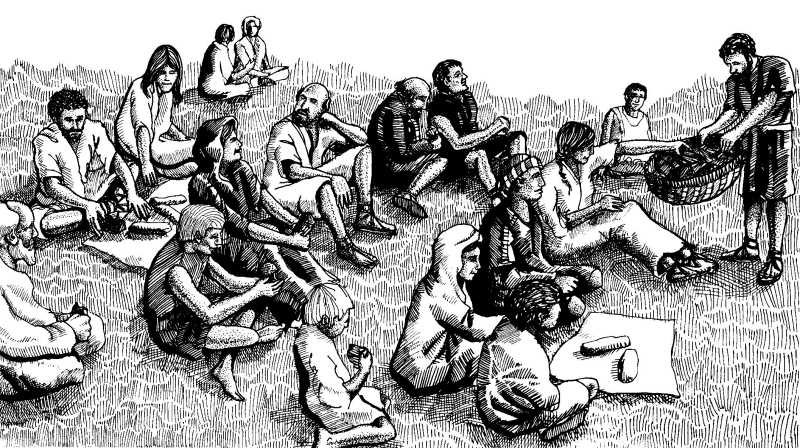
Today in Mark 8:1-10 we see Jesus feed another multitude.  Earlier in Mark He fed the 5000.  Today, He feeds the 4000:

Feeding the Four Thousand
8 In those days when there was again a great crowd without anything to eat, he called his disciples and said to them, 2 “I have compassion for the crowd, because they have been with me now for three days and have nothing to eat. 3 If I send them away hungry to their homes, they will faint on the way—and some of them have come from a great distance.” 4 His disciples replied, “How can one feed these people with bread here in the desert?” 5 He asked them, “How many loaves do you have?” They said, “Seven.” 6 Then he ordered the crowd to sit down on the ground; and he took the seven loaves, and after giving thanks he broke them and gave them to his disciples to distribute; and they distributed them to the crowd. 7 They had also a few small fish; and after blessing them, he ordered that these too should be distributed. 8 They ate and were filled; and they took up the broken pieces left over, seven baskets full. 9 Now there were about four thousand people. And he sent them away. 10 And immediately he got into the boat with his disciples and went to the district of Dalmanutha.

NT Ch15Ok, so why does Jesus feed large crowds twice?  Not to be trite, but the simple answer is that Jesus loved people, and this is at least twice in His ministry when large crowds were with Him, and He knew that if He was to send them away without food they may not make it home.  So, why did Jesus do this twice?  The simple reason is because people needed it twice.

But there is something deeper and bigger going on here, as there is with almost all that happens in the Bible. There are two things that jump out to me in this reading that I think are significant.  First, look at the “faith” of the Disciples.  Remember, they had already seen Jesus feed an even larger crowd before. But when He says that the people must be fed, they say, how can we feed this many people here in the desert?

They’d seen Jesus do it before.  They knew that He could do it, they saw it with their own eyes, the experienced it, they helped.  And yet, they still doubted.

Aren’t we like that?  Don’t we know what God can do?  Haven’t we seen Him do it before?  Aren’t we aware of His power?  Yes.  Yes we are.  And yet, don’t we doubt, as they did?  Don’t we forget, as they did?  They did.  And we do.

On one hand, we need to learn, as they did, to have faith, to not doubt, to remember the faithfulness of God.  Remember how He has been there.  Remember what He has done.  Remember who He is. Remember His faithfulness from generation to generation.

But when we do, we need to show ourselves grace as well. Because we weren’t the first to doubt.  The very ones that walked with Jesus doubted as well.  And He didn’t give up on them. And He won’t give up on us either.

Second, many scholars believe that the first feeding of the multitude (the 5000) was a Jewish crowd, and many think that this crowd, if not mainly Gentile, had many Gentiles within it.  This was on the western side of the Sea of Galilee, which was the more Gentile area.  We cannot say for 100% certain that there were Gentile there, but reading into the context of scripture, it’s a safe assumption.

So, we have seen Him heal Gentiles.  Now we see Him feed Gentiles. We are seeing more and more that Jesus Christ came to redeem the world. All the world.  All that call upon His name.  All

And in a world that is so, so, so very polarized and full of hardening lines, I think it’s important for us to remember that Jesus Christ came for the world.  The entire world. For all who believe.

Today, may we live out that grace with all that we meet.

Friday we’ll look at Mark 8:11-12.

What questions do you have?  How does this strike you?  Shoot me an email, comment below, or connect with me through social media.

If you’d like to receive these thoughts by email, be sure to click here and join my email devotional group!
Day Twenty-Nine with Mark: Mark 7:24-30

Today we are going to look at one of those passages in Scripture that frankly, no one really understands.  Listen to what happens in Mark 7:24-30:

The Syrophoenician Woman’s Faith
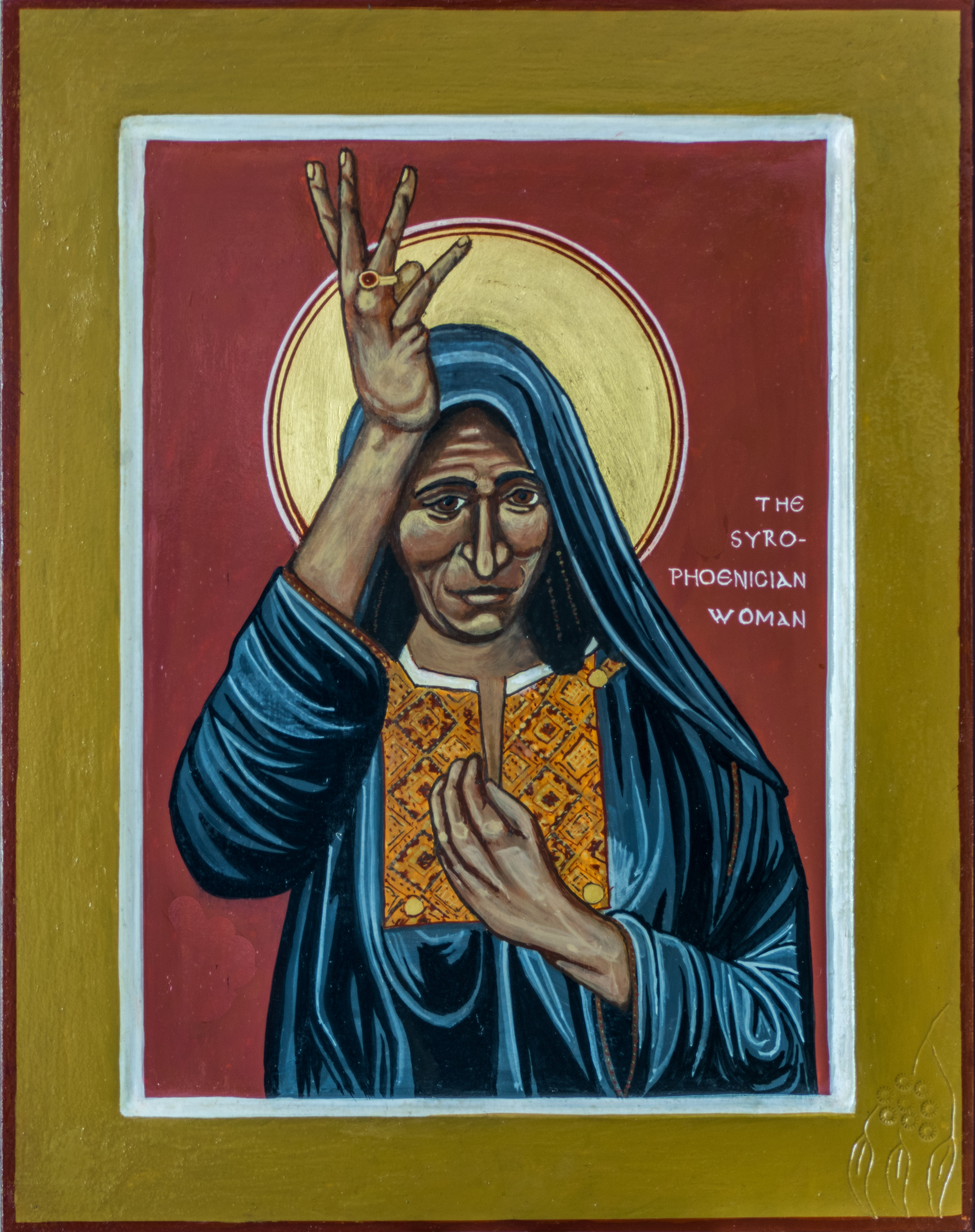
24 From there he set out and went away to the region of Tyre. He entered a house and did not want anyone to know he was there. Yet he could not escape notice, 25 but a woman whose little daughter had an unclean spirit immediately heard about him, and she came and bowed down at his feet. 26 Now the woman was a Gentile, of Syrophoenician origin. She begged him to cast the demon out of her daughter. 27 He said to her, “Let the children be fed first, for it is not fair to take the children’s food and throw it to the dogs.” 28 But she answered him, “Sir, even the dogs under the table eat the children’s crumbs.” 29 Then he said to her, “For saying that, you may go—the demon has left your daughter.” 30 So she went home, found the child lying on the bed, and the demon gone.

syrophoenician-woman-3mbOk, there’s a lot happening here.  In Mark’s Gospel, for the first time, we see Jesus heal a Gentile.  We  see Jesus talking with a women (who is a Gentile) which went against the customs of the people by like 1,000%. But these things aren’t out of the ordinary, we see Jesus do things like this quite often.  This is what is different about it.  The language that He uses when talking to the woman.

First He says that the children, which in this case refers to the Jews, must be feed first.  That’s not too unusual in Jesus ministry, several times He sends the Disciples out only the Jewish village.  Jesus is following through with the echoes of Genesis 12 where God tells Abraham that his descendants (the Jewish people) will be a light to the world.  In other words, the call of Abraham was ultimately that the Jewish people would be that light to all the world.  This is God calling out once again to His people.

But what happens next is the part that is hard to understand.  He says to her “it is not fair to take the children’s food and throw it to the dogs.”  In other words is seems to be implying that Jesus is calling Gentiles dogs.  Now some Biblical commentators will say that the word Jesus was using there was more the word for puppy, a play thing, a term of affection. But that really doesn’t seem to be the case.

This is the part that we struggle with, why did Jesus use that term?

Well, let me give you my opinion.  And like I say all the time with my opinion, it and a $1.50 will get you cup of coffee.

I think the first reason He called here that was for her benefit.  Let there be no doubt, He loved her.  He loves the world, He created the world.  So know this.  He loved and valued her.  So, why then did He do it this way?  I think He wanted here to know that she was of great worth to her.  He “tested” her.  And here’s the thing about when God tests us.  The test is never for His benefit, it’s always for ours.  He knows what we will do.  He is not surprised by our choices.  He knows what we will decide.

The test is not for Him.  It’s for us.

Jesus knew she was beloved and His.  She didn’t.  In this conversation, she said out loud that she matters.  And she found within her strength that she didn’t know that she had.  This conversation pushed her to look within herself and say out loud who she was.  She was a child of God.  Jesus knew it.  Now she knew it.

And the second person, or persons, this benefited was the disciples.  They had seen very little interaction with Gentiles.  This would have been one of their first encounters with a Gentile.  And now they see a Gentile WOMAN speaking to Jesus, arguing with Him and now being rewarded by Jesus saying that she has the type of faith that everyone should have.

Could there be any doubt now that Jesus came for the entire world?

This conversation and healing wasn’t just for her benefit, but it was the benefit the Disciples and those that followed Jesus.  He guided the conversation to a place where she had to say out loud what Jesus knew to be true.  She mattered.  She was valuable.  She was His.

He knew that.  In saying it, so does she.  And so did all those that followed.

Tomorrow we’ll look at Mark 7:31-37.

What questions do you have?  How does this strike you?  Shoot me an email, comment below, or connect with me through social media.

If you’d like to receive these thoughts by email, be sure to click here and join my email devotional group!

Day Twenty-Eight with Mark: Mark 7:1-23

Wednesday we looked at the concept of tradition we found in Mark 7:1-23, today we’ll look at some of the specifics of what happens in this text:

The Tradition of the Elders
7 Now when the Pharisees and some of the scribes who had come from Jerusalem gathered around him, 2 they noticed that some of his disciples were eating with defiled hands, that is, without washing them. 3 (For the Pharisees, and all the Jews, do not eat unless they thoroughly wash their hands, thus observing the tradition of the elders; 4 and they do not eat anything from the market unless they wash it; and there are also many other traditions that they observe, the washing of cups, pots, and bronze kettles. 5 So the Pharisees and the scribes asked him, “Why do your disciples not live according to the tradition of the elders, but eat with defiled hands?” 6 He said to them, “Isaiah prophesied rightly about you hypocrites, as it is written,

‘This people honors me with their lips,
but their hearts are far from me;
7 in vain do they worship me,
teaching human precepts as doctrines.’
8 You abandon the commandment of God and hold to human tradition.”

9 Then he said to them, “You have a fine way of rejecting the commandment of God in order to keep your tradition! 10 For Moses said, ‘Honor your father and your mother’; and, ‘Whoever speaks evil of father or mother must surely die.’ 11 But you say that if anyone tells father or mother, ‘Whatever support you might have had from me is Corban’ (that is, an offering to God — 12 then you no longer permit doing anything for a father or mother, 13 thus making void the word of God through your tradition that you have handed on. And you do many things like this.”

14 Then he called the crowd again and said to them, “Listen to me, all of you, and understand: 15 there is nothing outside a person that by going in can defile, but the things that come out are what defile.”

17 When he had left the crowd and entered the house, his disciples asked him about the parable. 18 He said to them, “Then do you also fail to understand? Do you not see that whatever goes into a person from outside cannot defile, 19 since it enters, not the heart but the stomach, and goes out into the sewer?” (Thus he declared all foods clean.) 20 And he said, “It is what comes out of a person that defiles. 21 For it is from within, from the human heart, that evil intentions come: fornication, theft, murder, 22 adultery, avarice, wickedness, deceit, licentiousness, envy, slander, pride, folly. 23 All these evil things come from within, and they defile a person.”

imgresJesus point in all of this is this.  It’s what on the inside that causes the outward action to happen.  Our faith, at its heart, is a matter of the heart.  We are an inside out religion.  What happens in the heart, what happens in our faith that will show itself in our actions.

Here’s the thing, like I like to tell my church, if Jesus has your heart, He will have your actions.  He just will.  If He is Lord of your heart, He will become Lord of your actions.

But you can “do” right, and not “be” right.  And if you are not right, in time, you will stop acting right.  Because our heart always determines our actions.  For us, as Christians, it starts internally.  And it shows itself externally.

In this passage, He is saying that the people are honoring God with their words, but their hearts are far away.  And in time, their words will move as well.  Their words and their actions will follow their heart.

So, the first, and the main question is this.  Where is our heart?  That question truly does determine everything else.  That question answers all the other issues that we will face.

We are an inside out religion.  Never forget that.  Never put the cart before the horse.  If Jesus is Lord of our heart, He will become Lord of every area of our life.

Today, may that be so.

Monday we’ll look at Mark 7:24-30.

What questions do you have?  How does this strike you?  Shoot me an email, comment below, or connect with me through social media.

If you’d like to receive these thoughts by email, be sure to click here and join my email devotional group!

Day Twenty-Five with Mark: Mark 6:45-52

Near the end chapter 6 of Mark, we see stories that we all know so well, the feeding of the 5000, and now in verses 45-52, we see Jesus walking on water. Listen to what the Word tells us:

Jesus Walks on the Water
45 Immediately he made his disciples get into the boat and go on ahead to the other side, to Bethsaida, while he dismissed the crowd. 46 After saying farewell to them, he went up on the mountain to pray.

47 When evening came, the boat was out on the sea, and he was alone on the land. 48 When he saw that they were straining at the oars against an adverse wind, he came towards them early in the morning, walking on the sea. He intended to pass them by. 49 But when they saw him walking on the sea, they thought it was a ghost and cried out; 50 for they all saw him and were terrified. But immediately he spoke to them and said, “Take heart, it is I; do not be afraid.” 51 Then he got into the boat with them and the wind ceased. And they were utterly astounded, 52 for they did not understand about the loaves, but their hearts were hardened.

We see Jesus send the disciples back across the late to close to where they were staying.  But notice what Jesus does when He sends them off.  The text says that He goes up to the mountain to pray.  I think that’s one thing that we always have to take away from Jesus’ life when we look at it. The important of prayer for His life.  Jesus always, always, always spends time in prayer.

And to me, that’s such a huge thing, because think about this.  Jesus Christ is the very son of God.  He is the second person of the Trinity.  He is part of the Godhead.  He is literally one with God.  Literally.

And yet He takes time to pray to His Father.  He takes time to seek His Father’s face in prayer.  Jesus Christ knows the importance, the value, the purpose of prayer.  And He’s God Himself.

So, if Jesus understands the importance of prayer, shouldn’t we?  If Jesus took time to pray, shouldn’t we?  If this matter to Jesus, shouldn’t it matter to us?  Each time in scripture when I see Jesus understand the importance of prayer, I am reminded about just how important prayer is.  And I have to ask myself, do I pray as I ought?

Prayer mattered to Jesus.  It has to matter to us as well.

Amédée_Varint_-_Christ_marchant_sur_la_merAfter this time of prayer, we see Jesus walking upon the waters to the disciples.  And notice what they feel when they see Him walking out to them?  Fear.  They are afraid.  Because the know that no man can do this.  This is not human, they think that He’s a ghost.  They are terrified.

When they (or we) see Jesus fully in His power, it is a terrifying thing.  He is awe inspiring.  He is other.  He is God.  And that’s one of those things that our mind cannot hold together.  The incarnation.  Jesus is fully God and fully human.  He is Lord and friend.  He is our guide and He is our savior.  And He never leaves us.

Do not fear.  Do not be afraid.  No matter how big the problems you are face, Jesus is bigger.  Trust.

Do not fear.

Tomorrow we’ll look at Mark 6:35-56.

What questions do you have?  How does this strike you?  Shoot me an email, comment below, or connect with me through social media.

If you’d like to receive these thoughts by email, be sure to click here and join my email devotional group!
Day Twenty-Three with Mark: Mark 6:14-29

Today in Mark we look at the death of John the Baptist, as found in Mark 6:14-29:

The Death of John the Baptist
14 King Herod heard of it, for Jesus’ name had become known. Some were saying, “John the baptizer has been raised from the dead; and for this reason these powers are at work in him.” 15 But others said, “It is Elijah.” And others said, “It is a prophet, like one of the prophets of old.” 16 But when Herod heard of it, he said, “John, whom I beheaded, has been raised.”

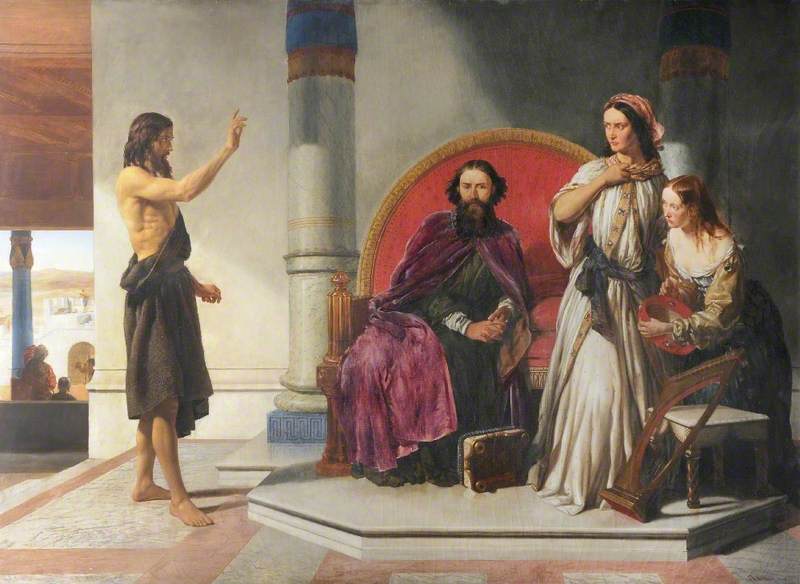
17 For Herod himself had sent men who arrested John, bound him, and put him in prison on account of Herodias, his brother Philip’s wife, because Herod had married her. 18 For John had been telling Herod, “It is not lawful for you to have your brother’s wife.” 19 And Herodias had a grudge against him, and wanted to kill him. But she could not, 20 for Herod feared John, knowing that he was a righteous and holy man, and he protected him. When he heard him, he was greatly perplexed; and yet he liked to listen to him. 21 But an opportunity came when Herod on his birthday gave a banquet for his courtiers and officers and for the leaders of Galilee. 22 When his daughter Herodias came in and danced, she pleased Herod and his guests; and the king said to the girl, “Ask me for whatever you wish, and I will give it.” 23 And he solemnly swore to her, “Whatever you ask me, I will give you, even half of my kingdom.” 24 She went out and said to her mother, “What should I ask for?” She replied, “The head of John the baptizer.” 25 Immediately she rushed back to the king and requested, “I want you to give me at once the head of John the Baptist on a platter.” 26 The king was deeply grieved; yet out of regard for his oaths and for the guests, he did not want to refuse her. 27 Immediately the king sent a soldier of the guard with orders to bring John’s head. He went and beheaded him in the prison, 28 brought his head on a platter, and gave it to the girl. Then the girl gave it to her mother. 29 When his disciples heard about it, they came and took his body, and laid it in a tomb.

John the Baptist is Jesus’ family and friend.  While many folks questioned and doubted who Jesus was, John believed.  Now we see John at times, under the stress of the moment, doubt as well, we see though, that John knew who Jesus was.  Jesus loved Him.  And John loved and followed Jesus.

And we see in this passage that John is murdered by the king.

I think that there are several things that we can learn from this passage today.  First, we see that just because we faithful, it doesn’t mean that we wound face troubles.  John was faithful.  John did what was right.  John stood for Jesus, John stood up against what was wrong.

And because of that John was struck down by the king.  Sometimes, doing what is right doesn’t mean that you won’t face troubles, in fact, it’s the other way.  Doing what’s right may increase your troubles.

So today, if you face opposition or trouble, don’t get down.  Don’t get discouraged.  It means you are being faithful.  In this world we will face troubles, but take heart.  Jesus has overcome this world.  Don’t worry.  Trust!

And then we can learn a lot from looking at Herod.  Two things jump out to me about him looking at the text.  First, he “knew” what was right.  Notice he like to hear John preach.  He knew he was a prophet.  He knew his words word true.  He knew that was John was saying was right.  He knew it.  But yet he didn’t want to do anything about it.  He didn’t want to change.

It isn’t enough that we know what is true.  We have to follow what is true.  Herod knew what was true.  He just didn’t want to follow it.

And the second thing I notice is the danger of pride.  He didn’t want to behead John.  It grieved him.  But yet, to not do that would have been embarrassing.  It would have harmed his pride.  So, he had to choose between doing what was right, or his pride.

And he chose his pride.

Pride is a dangerous thing.  Proverbs tells us that the pride goes before the fall.  Because of Herod’s pride, he choose wrong and did great harm.  

May we not make the same mistake today!

Friday we’ll look at Mark 6:30-44.

What questions do you have?  How does this strike you?  Shoot me an email, comment below, or connect with me through social media.

If you’d like to receive these thoughts by email, be sure to click here and join my email devotional group!
Day Twenty-one with Mark: Mark 6:1-6

Today we are looking at Jesus’ homecoming in Mark 6:1-6.  It really doesn’t go well for Him:

The Rejection of Jesus at Nazareth
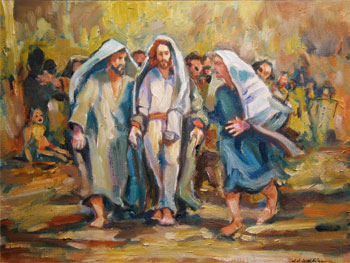
6 He left that place and came to his hometown, and his disciples followed him. 2 On the sabbath he began to teach in the synagogue, and many who heard him were astounded. They said, “Where did this man get all this? What is this wisdom that has been given to him? What deeds of power are being done by his hands! 3 Is not this the carpenter, the son of Mary and brother of James and Joses and Judas and Simon, and are not his sisters here with us?” And they took offense at him. 4 Then Jesus said to them, “Prophets are not without honor, except in their hometown, and among their own kin, and in their own house.” 5 And he could do no deed of power there, except that he laid his hands on a few sick people and cured them. 6 And he was amazed at their unbelief.

JeffWatkinsJRejectedatNazoilJesus had gone to many different places in Mark’s Gospel and one of the things that we have seen over and over again is His power and His authority.  Folks are amazed at it.  And today, we seem Him go to His hometown of Nazareth, and they too see that authority.  They too see His power, they hear of His mighty deeds.

And they took offense at Him.  Wow.  They knew His family.  They knew His “mama and them” and just couldn’t believe that this was the same person that they knew.  I just can’t get over that phrase.  They took offense at Jesus.  So because of that, Jesus wasn’t able to do any deeds.  So, a couple of things.

First, why did they take offense?  Scripture doesn’t say, but perhaps they were thinking a couple of things.  Why Him?  I mean, what’s so special about Jesus.  We know, but they didn’t.  Or perhaps why not them?   I mean, aren’t they just as able to those things as Jesus?

Maybe it comes down to jealousy.  They missed what God was doing. So often in the Bible, so often in Jesus ministry, that’s one of the things that we see.  People miss what God is doing.  Most times it’s because they are not looking.  This time, it’s because they are looking, and they don’t like what they see.

Today, let’s look with discernment.  Let’s prayerfully look.  Let’s take all that we see under the grace of God.  Let’s not look past anyone.  And let’s not be jealous of anyone.  

The other thing about this is that Jesus couldn’t do any miracles because of their lack of faith.  Miracles aren’t “invoked” because of faith.  It’s not like we can make them happen by having “enough” faith.  That’s not the way that God works.  But, that said, in the order of salvation, we have a part to play.  We have to respond.  We have to do our part.  God’s grace doesn’t do us any good if we won’t accept it.

Perhaps Jesus couldn’t do any miracles there, because they weren’t willing to receive them. 

Today, may we be open to whatever God wants to do.

Tomorrow we’ll look at Mark 6:6-13.

What questions do you have?  How does this strike you?  Shoot me an email, comment below, or connect with me through social media.

If you’d like to receive these thoughts by email, be sure to click here and join my email devotional group!
Day Twenty with Mark: Mark 5:21-43

Wednesday we looked at the big picture of Mark 5:21-43.  Today, we are going to look at the specifics of the text:

A Girl Restored to Life and a Woman Healed

21 When Jesus had crossed again in the boat to the other side, a great crowd gathered around him; and he was by the sea. 22 Then one of the leaders of the synagogue named Jairus came and, when he saw him, fell at his feet 23 and begged him repeatedly, “My little daughter is at the point of death. Come and lay your hands on her, so that she may be made well, and live.” 24 So he went with him.

And a large crowd followed him and pressed in on him. 25 Now there was a woman who had been suffering from hemorrhages for twelve years. 26 She had endured much under many physicians, and had spent all that she had; and she was no better, but rather grew worse. 27 She had heard about Jesus, and came up behind him in the crowd and touched his cloak, 28 for she said, “If I but touch his clothes, I will be made well.” 29 Immediately her hemorrhage stopped; and she felt in her body that she was healed of her disease. 30 Immediately aware that power had gone forth from him, Jesus turned about in the crowd and said, “Who touched my clothes?” 31 And his disciples said to him, “You see the crowd pressing in on you; how can you say, ‘Who touched me?’” 32 He looked all around to see who had done it. 33 But the woman, knowing what had happened to her, came in fear and trembling, fell down before him, and told him the whole truth. 34 He said to her, “Daughter, your faith has made you well; go in peace, and be healed of your disease.”

35 While he was still speaking, some people came from the leader’s house to say, “Your daughter is dead. Why trouble the teacher any further?” 36 But overhearing what they said, Jesus said to the leader of the synagogue, “Do not fear, only believe.” 37 He allowed no one to follow him except Peter, James, and John, the brother of James. 38 When they came to the house of the leader of the synagogue, he saw a commotion, people weeping and wailing loudly. 39 When he had entered, he said to them, “Why do you make a commotion and weep? The child is not dead but sleeping.” 40 And they laughed at him. Then he put them all outside, and took the child’s father and mother and those who were with him, and went in where the child was. 41 He took her by the hand and said to her, “Talitha cum,” which means, “Little girl, get up!” 42 And immediately the girl got up and began to walk about (she was twelve years of age). At this they were overcome with amazement. 43 He strictly ordered them that no one should know this, and told them to give her something to eat.

Ok, so we see two individuals healed. First, we see the daughter of Jarius healed.  Notice, we don’t know her name.  She’s a child and in that culture, children are considered little more than property.  So, notice that’s why the people said, she’s dead now, don’t bother Jesus anymore.  In this story, Jesus not only brings her back to life, but He inconveniences Himself to do that.  That’s something that would not happen in that culture.

She is worth something to Jesus.  She is worth being healed, she is worth being brought back to life.  No matter what others think, she is worth Jesus’ time and efforts.

Look at Jesus words to the father in verse 36 – do not fear, only believe.  What great words for us today.  No matter what we are going through today, there is a choice that we have to make, fear or belief.  Sometimes (most times) we have a combination of the two.  We are afraid, but we believe.  Jesus says, trust.  I have this.  Trust.

Today, no matter what it is that you are going through, don’t be afraid.  Trust.  Jesus has this.  Trust.

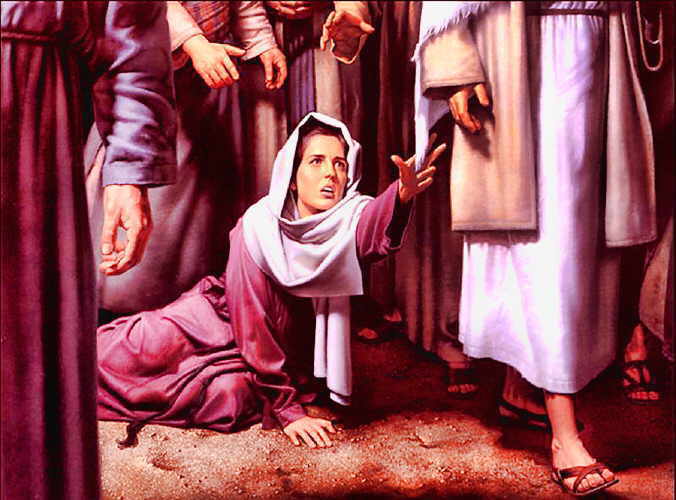
healingawomanwithinternalbleeding222The second healing (technically the first, as she was healed on the way) was the woman who had been bleeding for twelve years.  Ok, Jesus told Jarius not to fear, only believe.  That’s exactly what we see in this woman who was healed.  She was bleeding.  That made her unclean.  And here’s thing about being unclean, that was transferable.  So, if you’re unclean and you touch someone, you make them unclean.

So, this woman touches Jesus making Him unclean.  But here’s the thing, you can’t make Jesus unclean.  He’s the Son of God, second person of the Trinity, God Himself.  He’s unstainable.  So, He doesn’t become unclean.  But she didn’t know that.  All that she knew was this.  She had faith that if she touched Him, she would be made whole.  So she does it.

In that culture, you simply didn’t do that.  An unclean person didn’t touch a clean person.  A woman never touched a man, much less a rabbi like Jesus.  You just didn’t do that.  You didn’t.

Compare her faith to the people who were there at Jarius’ house.  She KNEW Jesus could heal her.  She KNEW it.  They laughed.

Do not fear, only believe.  Yeah, that’s a good word for us today.  Do not fear.  Only believe.

Monday we’ll look at Mark 6:1-6.

What questions do you have?  How does this strike you?  Shoot me an email, comment below, or connect with me through social media.

If you’d like to receive these thoughts by email, be sure to click here and join my email devotional group!
Day Eighteen with Mark: Mark 5:1-19

Yesterday we looked at some of the big picture issues of location and context and fear within Mark 5:1-19.  Today I want to look at little bit a the people involved in this story:

Jesus Heals the Gerasene Demoniac
5 They came to the other side of the sea, to the country of the Gerasenes. 2 And when he had stepped out of the boat, immediately a man out of the tombs with an unclean spirit met him. 3 He lived among the tombs; and no one could restrain him any more, even with a chain; 4 for he had often been restrained with shackles and chains, but the chains he wrenched apart, and the shackles he broke in pieces; and no one had the strength to subdue him. 5 Night and day among the tombs and on the mountains he was always howling and bruising himself with stones. 6 When he saw Jesus from a distance, he ran and bowed down before him; 7 and he shouted at the top of his voice, “What have you to do with me, Jesus, Son of the Most High God? I adjure you by God, do not torment me.” 8 For he had said to him, “Come out of the man, you unclean spirit!” 9 Then Jesus asked him, “What is your name?” He replied, “My name is Legion; for we are many.” 10 He begged him earnestly not to send them out of the country. 11 Now there on the hillside a great herd of swine was feeding; 12 and the unclean spirits begged him, “Send us into the swine; let us enter them.” 13 So he gave them permission. And the unclean spirits came out and entered the swine; and the herd, numbering about two thousand, rushed down the steep bank into the sea, and were drowned in the sea.

14 The swineherds ran off and told it in the city and in the country. Then people came to see what it was that had happened. 15 They came to Jesus and saw the demoniac sitting there, clothed and in his right mind, the very man who had had the legion; and they were afraid. 16 Those who had seen what had happened to the demoniac and to the swine reported it. 17 Then they began to beg Jesus to leave their neighborhood. 18 As he was getting into the boat, the man who had been possessed by demons begged him that he might be with him. 19 But Jesus refused, and said to him, “Go home to your friends, and tell them how much the Lord has done for you, and what mercy he has shown you.”

734215_10152379208205043_756632953_nFirst, we see the man.  Look at the torment he had been through.  One of the things that we see Jesus do over and over again in the text is bring healing.  This man needed physical healing, he was cutting himself, harming himself, in great pain, but his physical needs came from a spiritual place.

Jesus cast out the demons and in doing this it brought spiritual and physical healing to this man.  Healing always starts with the spiritual.  In this life, the physical may, or may not, be healed.  But, through Jesus, the heart and the soul can be healed.  Jesus wants to bring healing.  He wants to bring grace.  He wants to bring forgiveness.  Forgiveness for us, and our ability to forgive others.  He longs to restore our soul and restore our life.

Jesus saw this man in pain, and He brought healing.

And look what the man wanted to do.  He said – let me follow you.  And Jesus said, no.  Do something even harder.  Tell your friends what God has done for you.  Why?  Why didn’t Jesus let him go with them?

Look at the reaction of the people in 17.  The people begged Jesus to leave.  Why?  Why did they want Jesus to leave?  Well, we see that their swine had been destroyed (By the way, sidebar – why did the demons want to go into the pigs?  Lots of opinions on this, but I’ll give you mine.  They were destructive.  They wanted to destroy as much as they could. When they could no longer destroy this man, they wanted to destroy something else).  They saw Jesus’ power.  And they were scared of it.  It was bigger than them.

Jesus was other.  And the didn’t know what to do with Him.  So they asked Him to leave.

We would never do that, would we?  Well, how many of us have felt God calls us to something, we know, we know, we know that there is something that God is calling us to.  And we run.  We run from it, we run from God.

Why?  A thousand different reasons, different reasons for all of us. But for me, and probably for many of us, its control.  We like being in control and to let God and follow Him with abandon means losing control.  Giving Him full control. And that’s terrifying.  Even though we know He is good and only wants the best for us.  It’s still scary.

And that’s why we’ve got to trust Him and follow. And sometimes we follow not to far away places. But to our own town.

Today, no matter where He calls, may we faithfully follow.

Tomorrow we’ll look at Mark 5:21-43.

What questions do you have?  How does this strike you?  Shoot me an email, comment below, or connect with me through social media.

If you’d like to receive these thoughts by email, be sure to click here and join my email devotional group!