Day Eleven with Mark: Mark 3:20-30

Today in Mark, we look at Mark 3:20-30, and we find some unexpected things happen:

20 and the crowd came together again, so that they could not even eat. 21 When his family heard it, they went out to restrain him, for people were saying, “He has gone out of his mind.” 22 And the scribes who came down from Jerusalem said, “He has Beelzebul, and by the ruler of the demons he casts out demons.” 23 And he called them to him, and spoke to them in parables, “How can Satan cast out Satan? 24 If a kingdom is divided against itself, that kingdom cannot stand. 25 And if a house is divided against itself, that house will not be able to stand. 26 And if Satan has risen up against himself and is divided, he cannot stand, but his end has come. 27 But no one can enter a strong man’s house and plunder his property without first tying up the strong man; then indeed the house can be plundered. 28 “Truly I tell you, people will be forgiven for their sins and whatever blasphemies they utter; 29 but whoever blasphemes against the Holy Spirit can never have forgiveness, but is guilty of an eternal sin”— 30 for they had said, “He has an unclean spirit.”

In today’s passage, we see Jesus go home.  And it really doesn’t go well.  Folks back home aren’t really happy to see Him.  A couple of things to notice about all that is happening here.  First, in our minds, didn’t we think that everyone loves and affirms Jesus?  I mean, everyone loves Jesus, right?

Look at what happens in this passage.  I mean, really look what happens here.  His family is starting to think He may be crazy or demon possessed. They go out to restrain Him.  That is not what we expect to see happen.  That is not the way that life is supposed to God for Jesus.

When we see Jesus, as told to us in the Gospels, He is not safe.  He is not ordinary.  He doesn’t leave people be.  He brings to the ones that are broken and afraid, He brings them grace.  But to the ones that are comfortable and spiritually asleep, He yells WAKE UP!

Where would we be in this story?  Would we welcome Him?  Or would we want Him to calm down?  When you look at how people react to Jesus in scripture, it really isn’t what we expect, is it?

unforgivable-sin-full-v2We see Jesus teaching today about what the unforgivable sin is.  In the text, He says that blaspheme against the Holy Spirit is eternal (often called unforgivable).  In my ministry, I’ve had people come to me and say, “Andy, I think I’ve blasphemed.”  My response is always, do you feel bad about it?  And they say, yeah, I feel terrible. And then I say, well then you haven’t blasphemed.

Blasphemy is unforgivable for this reason.  You won’t ask forgiveness for it.  That is the reason why.  You’ve got so far, that you won’t confess and repent.  Every sin that is confessed and repented of will be forgiven.  But if you’ve blasphemed, then you won’t do that?

Why?  Look specifically at what Jesus says.  He says, “whoever blasphemes against the Holy Spirit.”  And notice this conversation is in relation to works of the devil.  Basically what He is saying here is when you take the works of God (i.e. what  Jesus is doing and teaching) and say that they are the works of the devil (what the Pharisees are doing), you are saying that God and His power are evil.

You are making the Holy Spirit a work of evil.  You are calling God a liar.  You are undercutting the work of the Spirit.

Why is that unforgivable?  Because it’s through the spirit we are drawn to repentance.  It’s through the spirit we are convicted, we are called, we are brought home.  But if you deny that the spirit is good, if you harden your heart to it, then you’ve cut yourself off from any means of conviction and repentance.

But, if you feel bad about what you’ve done or said, then you’ve not blasphemed. Because you haven’t hardened your heart to what God is doing.  As long as you desire to be forgiven, you will be forgiven.  You will.

That’s why blasphemy is unforgivable.  You don’t want that forgiveness.  And that’s why in my ministry, I’ve never actually met anyone that’s done it.

What questions do you have?  How does this strike you?  Shoot me an email, comment below, or connect with me through social media.

Tomorrow we’ll look at Mark 3:31-35.

If you’d like to receive these thoughts by email, be sure to click here and join my email devotional group!
Day Ten with Mark: Mark 3:13-19

Today in our journey through Mark, we look at Mark 3:13-19, where Jesus appoints His twelve disciples:

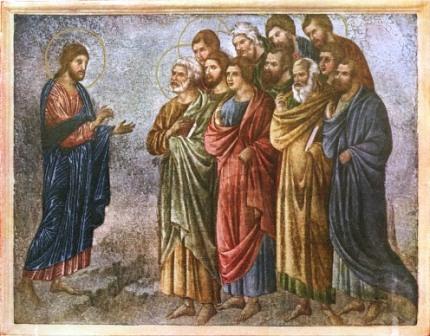
13 He went up the mountain and called to him those whom he wanted, and they came to him. 14 And he appointed twelve, whom he also named apostles, to be with him, and to be sent out to proclaim the message, 15 and to have authority to cast out demons. 16 So he appointed the twelve: Simon (to whom he gave the name Peter); 17 James son of Zebedee and John the brother of James (to whom he gave the name Boanerges, that is, Sons of Thunder); 18 and Andrew, and Philip, and Bartholomew, and Matthew, and Thomas, and James son of Alphaeus, and Thaddaeus, and Simon the Cananaean, 19 and Judas Iscariot, who betrayed him.

sending_twelveA couple of things that we notice in this passage.  First, some clarifications of language.  Here it says that He appointed “Twelve.”  They aren’t given a title.  Before the Resurrection, these twelve are called Disciples and after they are called Apostles.  Same people, though. The definition of an Apostle is one that Jesus appeared to and gave a specific task. That’s why Paul is an Apostle, even through he was not one of the Disciples.

Another thing is that there are different “levels,” if you will, of people who follow Jesus. There are the general crowds that follow Him when He preaches, but those crowds go back to their homes when the day is over.  Then there are the women that followed and supported His ministry, like Mary Magdalene.  And in this culture this is extraordinary.  Women didn’t leave the home, much less follow an itinerant preacher around Galilee.  But Jesus included them in His followers and it was Mary that was the first tell anyone that He had risen from the dead.

Then you have the 72 that Jesus sent out to do ministry as well.  This would have been those that were close to Him, that were faithful and that followed Him.   He had a large group with Him at almost all times.

But we see in this, the Twelve. There is great symbology about the number twelve, remember there were twelve tribes of Israel, in appointing twelve, Jesus is showing that His ministry stands fully in line with the Old Testament and that all the promises of the Old Testament were ultimately pointing to Him.

Notice, though who He calls.  Not many were educated.  They were fishermen.  They were common.  In fact, we don’t know a lot about many of them.  But let me tell you my favorite thing about the Twelve.  There is Simon the Cananaean.  And there is Matthew (or Levi) who we saw Jesus call earlier.  Matthew as a tax collector.  Simon was a member of a group known as the Zealots.  The zealots were a group of Jews that wanted to drive out the Romans. They HATED the Romans. They would often carry a dagger in their belt so that they could kill a Roman when the chance came.

And you know they only people they hated more than Romans?  Tax collectors.  Why?  Because tax collectors where traitors. They betrayed their people to work for the Romans.  Man on man, did they hate tax collectors.

And who were two of the Twelve?  Matthew, a tax collector.  And Simon, a zealot.  Through Jesus they could move past their hatred, their distrust, all the baggage that they brought to this group.

Through Jesus they could.  Through following Him, through making Him their Lord, they could.

If they focus on their “stuff” they would have killed each other.  If they focus on Jesus, they have unity.  When Jesus is in the middle, He brings life out of our diversity and difference. When we put our “stuff” in the middle, it tears us apart.

Jesus was able to bring unity out of such great difference.  And He can do the same today.

May we find our unity and purpose, today and each day, in Jesus Christ.

What questions do you have?  How does this strike you?  Shoot me an email, comment below, or connect with me through social media.

Tomorrow we’ll look at Mark 3:20-30.

If you’d like to receive these thoughts by email, be sure to click here and join my email devotional group!

Day Nine with Mark: Mark 3:7-11

Today in our daily readings with Mark, we look at Mark 3:7-11, entitled A Multitude at the Seaside and Jesus Appoints the Twelve:

A Multitude at the Seaside
7 Jesus departed with his disciples to the sea, and a great multitude from Galilee followed him; 8 hearing all that he was doing, they came to him in great numbers from Judea, Jerusalem, Idumea, beyond the Jordan, and the region around Tyre and Sidon. 9 He told his disciples to have a boat ready for him because of the crowd, so that they would not crush him; 10 for he had cured many, so that all who had diseases pressed upon him to touch him. 11 Whenever the unclean spirits saw him, they fell down before him and shouted, “You are the Son of God!”

slide-10-jesus-on-boatIn these this passage, we people drawn to Jesus.  And you know who they were?  Everyone?  All types of people were drawn to Jesus.  We see in the first section we see where people came to Jesus from.  Everywhere.  Judea, Jerusalem, across the Jordan, everywhere.  People came to hear Jesus from everywhere.

And here’s the thing about that, coming to Galilee to hear Jesus was not an easy thing to do. It wasn’t easy to get there, people had responsibilities and jobs to do and there weren’t just able to take off and go off to hear Him.  And above all that, who wants to go up to Galilee?  People were used to going to Jerusalem to the Temple. They were used to and accustomed to that.

But to Galilee?  That’s beneath so many of them. Nope.  No reason I’d do that.  Not gonna happen.

Except there was a reason.  And that reason was Jesus.  They needed healing and life. And Jesus had that.  And they were willing to go wherever they needed to go to find that healing and life.  They were attracted to Jesus.

And I think there are two major things we need to be aware of in this.

First, are we drawn to Him in that same way?  They knew that Jesus was the hope that they need for their life. And so they came to Him, from near and far, seeking that hope, seeking that life.  What about us in our lives?  Do we know, do we truly know, that Jesus is that hope in our lives?  And are we willing to do what we must to be in relationship with Him?

Now, for us, that may not mean traveling across America.  It may mean waking up a little early to pray.  It may mean inconveniencing ourselves in some way to seek Him.  It may me changing some things in our lives to know Him better.  The people in the text came from near and far and went through much to know Jesus.  How about us?

And second, see how people are always attracted to Jesus.  That’s one of the things that I always notice in scripture, people that don’t know Jesus are attracted to Jesus.  Are others drawn to Him through us?  As His Body, here on the earth, as those that have indwelling of the Holy Spirit, are people wanting to meet Jesus because of us.

That doesn’t mean that we are perfect, it means that we are different.

Today, do we desire to truly know Jesus?  And do others desire to know Jesus because of us?

What questions do you have?  How does this strike you?  Shoot me an email, comment below, or connect with me through social media.

Tomorrow we’ll look at Mark 3:13-19.

If you’d like to receive these thoughts by email, be sure to click here and join my email devotional group!

Day Eight with Mark: Mark 3:1-6

Today we take a look at Mark 3:1-6.  This is entitled The Man with a Withered Hand

The Man with a Withered Hand
3 Again he entered the synagogue, and a man was there who had a withered hand. 2 They watched him to see whether he would cure him on the sabbath, so that they might accuse him. 3 And he said to the man who had the withered hand, “Come forward.” 4 Then he said to them, “Is it lawful to do good or to do harm on the sabbath, to save life or to kill?” But they were silent. 5 He looked around at them with anger; he was grieved at their hardness of heart and said to the man, “Stretch out your hand.” He stretched it out, and his hand was restored. 6 The Pharisees went out and immediately conspired with the Herodians against him, how to destroy him.

Christ_heals_tne_man_with_paralysed_handWe see Jesus heal a man on the Sabbath.  Remember, this is after His teaching on the Sabbath and religion, religion is a good thing, but it doesn’t save.  Only Jesus saves.  The text here says that people were watching to see if He would heal, not to celebrate that someone was healed, but so that they may accuse Him.

Also, notice in verse 5, Jesus gets angry.  Did you expect to see that?  Two things.  First, being “angry” is not a sin.  If getting angry was a sin, then Jesus just sinned, and we know that Jesus didn’t sin. So, there are times in our lives when are going to get angry.

So, here’s the second thing, and a question.  What is it that makes us angry?  Why are we angry.  For Jesus, it is when people are harmed or abused.  When people are harmed or abused, we should be angry.  We should be angry at sin.  At things that are destructive.  We should be angry when children and families are endangered.  We should be angry at things that destroy.  But never act out of vengeance.  Be angry, but do not sin.

I want to unpack for you why the Pharisees were so against Jesus healing on the Sabbath and seemed to be a constant trouble to Jesus.  Believe it or not, they meant well.  They were trying to do what they thought was wrong, but man oh man, did they miss it.

To understand this, we’ve got to go back in the Old Testament. We see in Genesis 12, God called Abraham.  And we see what God promises him.  A land and a people (and that he will be a blessing to all the earth).

As we move forward through the Old Testament, in the Law and the Covenant, we see this Word over and over again to the people.  If you keep the covenant, you keep the land.  If don’t, you will lose it. And that’s what happened. The people didn’t keep the law, and ultimately the nation of Israel divided to the northern kingdom Israel (which was destroyed by Assyria) and the southern kingdom Judah (which was destroyed by Babylon).

Babylon took from Jerusalem the young, the brightest, the smartest, and brought them to Babylon with the intent of making them Babylonian.  That’s where the book of Daniel happened, it’s where Ezekiel wrote his prophecy, Psalm 137 was written then, and then Ezra and Nehemiah chronicles the process of restoration after the Babylonian exile.

What happened during the exile was a group of religious leaders rose up and said this (I’m paraphrasing).  Ok, y’all, last time we were home, we didn’t keep the law. And look what happened. We lost everything. So, when we get back, we are going to keep the law. We are going to keep our promises to God. And we will make sure the do it right. That’s where the Pharisees came from.

And you know what? What they wanted to do was a good thing. They wanted the people to keep their promises. They wanted people to keep the law. They wanted people to be true. But they guided by fear. They were afraid of what would happen when people broke the law.

So, we see Jesus heal on the Sabbath, which they considered work. And the law is clear.  Do not work on the Sabbath (by the way, they had built extra laws that would define what “work” was, how far you could walk, things such as that).  So instead of celebration that someone was healed, they would say YOU BROKE THE SABBATH!  REMEMBER WHAT HAPPENED LAST TIME WE DID THIS!  YOU CAN’T DO THAT!

Their intent started off good. But what happened was this. They mistook the law for God.  The focused more on their man-made laws than they did the revelation of God – Jesus Christ – standing in front of them.

They were guided by fear.  And that’s a dangerous, dangerous thing.  They were actually trying (in their own way) to honor God. But they missed the point.

And that can be a reminder to us today that truly want to worship God and honor Him. Let’s keep the main thing the main thing.  Let’s focus on following Jesus. And let’s do all that we can do to bring glory to His name.

What questions do you have?  How does this strike you?  Shoot me an email, comment below, or connect with me through social media.

Monday we’ll look at Mark 3:7-11.

If you’d like to receive these thoughts by email, be sure to click here and join my email devotional group!

Day Seven with Mark: Mark 2:18-28

Today we are looking at Mark 2: 18-28, two sections that have a very similar theme, a theme we are going to see emerge in the coming days’ readings. They are entitled “The Question about Fasting” and “Pronouncement about the Sabbath.”

The Question about Fasting
18 Now John’s disciples and the Pharisees were fasting; and people came and said to him, “Why do John’s disciples and the disciples of the Pharisees fast, but your disciples do not fast?” 19 Jesus said to them, “The wedding guests cannot fast while the bridegroom is with them, can they? As long as they have the bridegroom with them, they cannot fast. 20 The days will come when the bridegroom is taken away from them, and then they will fast on that day. 21 “No one sews a piece of unshrunk cloth on an old cloak; otherwise, the patch pulls away from it, the new from the old, and a worse tear is made. 22 And no one puts new wine into old wineskins; otherwise, the wine will burst the skins, and the wine is lost, and so are the skins; but one puts new wine into fresh wineskins.”

Pronouncement about the Sabbath
23 One sabbath he was going through the grainfields; and as they made their way his disciples began to pluck heads of grain. 24 The Pharisees said to him, “Look, why are they doing what is not lawful on the sabbath?” 25 And he said to them, “Have you never read what David did when he and his companions were hungry and in need of food? 26 He entered the house of God, when Abiathar was high priest, and ate the bread of the Presence, which it is not lawful for any but the priests to eat, and he gave some to his companions.” 27 Then he said to them, “The sabbath was made for humankind, and not humankind for the sabbath; 28 so the Son of Man is lord even of the sabbath.”

Spiritual_Discipline-1024x640We see two questions here that deal with the law.  One with fasting, one with the Sabbath.  Both of these things are spiritual disciplines.  Spiritual disciplines are very important.  They help us grow.  They help us become more faithful.  They are commands of Jesus Christ.  He tells to fast, and He tells us that we are supposed to keep the moral law of the Old Testament.

So, yes, these things are important.  But these things do not take the place of loving and following Jesus.  When Jesus called Levi yesterday, and Peter, Andrew, James, and John, He didn’t call them to fast or pray, but to follow Him.  Now stay with me here.  Here’s the thing.  If we love and follow Jesus, we will fast.  We will pray.  We will the disciplines.  Not because we have to.  But because in doing these things, we are being drawn closer to God.

Religion is not bad.  I know it’s cool to do that, to put down religion.  Religion is not bad.  It’s a good thing. I’m religious about things I love.  Like, for instance, Jesus Christ.  Religion doesn’t save.  Jesus saves.  But in following Jesus, we follow Him religiously.

So, in this passage, He doesn’t say don’t fast.  He says now is not the time to fast.  He doesn’t say don’t keep the Sabbath; He says that the Sabbath was made for man.  Fasting and keeping the Sabbath are very important. But they don’t save you.  Jesus saves.

Here’s the thing, though.  They are for our benefit.  Our good.  Our faith.  Our life.

But we do them not do make God love us.  We do it because God loves us.  Hear that again.  We don’t keep these disciplines to make God love us.  We keep them because He loves us, and we love Him and we want to know Him better.

With religion, we never need to put the cart before the horse.  I love Jesus.  And I love religion.  And I am thankful for both.  But I want to keep them in the proper order.

Today, may you be faithful.  May you be religious.  And may your religious lifestyle help you to love Jesus and love your neighbor more and more and more.

What questions do you have?  How does this strike you?  Shoot me an email, comment below, or connect with me through social media.

Tomorrow we’ll look at Mark 3:1-6.

If you’d like to receive these thoughts by email, be sure to click here and join my email devotional group!
Day Six with Mark: Mark 2:13-17

Today in our sixth day walking together through Mark, we look at Mark 2:13-17.  This passage is called Jesus Calls Levi.

Jesus Calls Levi
13 Jesus went out again beside the sea; the whole crowd gathered around him, and he taught them. 14 As he was walking along, he saw Levi son of Alphaeus sitting at the tax booth, and he said to him, “Follow me.” And he got up and followed him.

15 And as he sat at dinner in Levi’s house, many tax collectors and sinners were also sitting with Jesus and his disciples—for there were many who followed him. 16 When the scribes of the Pharisees saw that he was eating with sinners and tax collectors, they said to his disciples, “Why does he eat with tax collectors and sinners?” 17 When Jesus heard this, he said to them, “Those who are well have no need of a physician, but those who are sick; I have come to call not the righteous but sinners.”

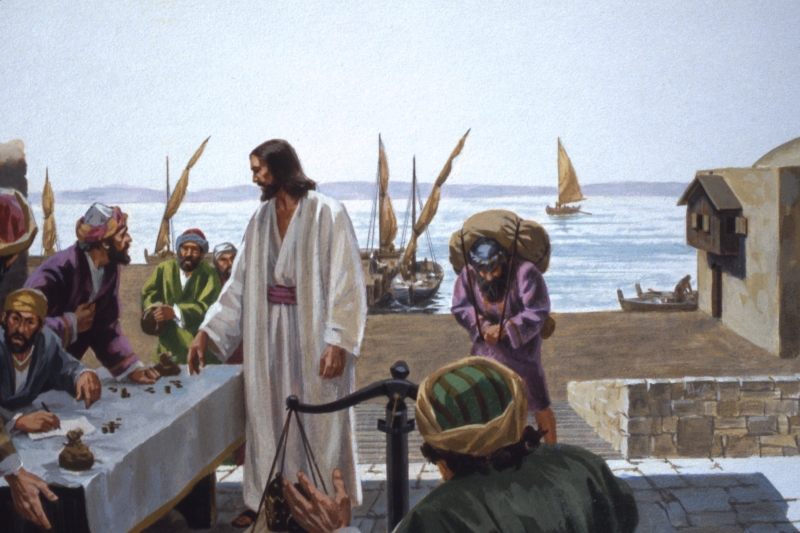
jesus-calls-matthew-2Levi is Matthew the tax collect, the Apostle and author of the Gospel Matthew.  Matthew is the Greek form of his name, Levi is the Hebrew form of his name.  Well, why would Levi (Matthew) go by two names?  Especially when unlike Peter, Jesus didn’t change his name?

Well, that had a lot to do with his job and why the Jews HATED the tax collectors.  We joke about tax collectors and the IRS and how no one likes tax collectors.  This isn’t that.  There were no more despised by the Jews than tax collectors.  Maybe the Samaritans, but it would be close.

Why were tax collectors so hated?  To the Jewish people, the tax collectors were traitors. They were Jews who betrayed their people and worked for the Romans. And even worse, the majority of tax collector were seen as thieves. What the tax collectors would do would be they that tell someone they owed a certain amount of money to Rome. Then, they would go and collect from them double or triple that amount.  And if the person could not pay it they would suffer the consequences from the Roman army.

So basically the tax collectors use the power of the Roman army to steal from their own people.  So, in short, they were thieves, they were traitors, and they associated with Gentiles.  Religiously, socially, politically, economically, every possible way that you could be hated, they were.

In Jesus day, tax collectors were truly despised.

If you were able to worship with us Sunday at St. Matthew’s, in my sermon we talked about how in Jesus’ culture, and still today, to share a meal with someone is a powerful thing, it is an act of acceptance, of friendship, of basically become family.  So, what then does it say that Jesus shared a meal with Levi (Matthew) and other tax collectors?  By the way, pay attention in all the Gospels to who all Jesus shares a meal with.  He eats with everyone, tax collectors, “sinners,” Pharisees.  He loved and loves the world.

In this act of eating with Matthew and his fellow tax collectors, Jesus is saying this.  I love you.  But notice this.  He doesn’t just accept them and it ends there.  Levi (Matthew) leaves behind tax collecting and follows Jesus as a Disciple.  He doesn’t just leave him there, but Jesus comes, loves, and calls.  Calls Levi to follow Him.  Calls him to leave behind his past, his mistakes, all that he has done. And follow Jesus. And Levi does.

Now, look at the response of the religious leaders.  They can’t believe that Jesus is doing this.  I’ll unpack later why the religious leaders get so upset at Jesus, but for now, just know this, its misplaced passion. They actually, in their minds, are trying to honor God, but they are doing it completely, totally, wrong.

And Jesus says this, He has come for this sick, not the righteous.  Now, we know that none are righteous, so Jesus is speaking hyperbolic here.  He’s making a point.  What is that point?  It’s better to know that you are weak and sinful and need help than to think you are stronger than you really are, and never ask for the help you need.

Today, Jesus calls and eats with tax collectors. And He calls us wherever we are.  May we be like Levi.  May we follow, wherever He calls us!

What questions do you have?  How does this strike you?  Shoot me an email, comment below, or connect with me through social media.

Tomorrow we’ll look at Mark 2:18-28.

If you’d like to receive these thoughts by email, be sure to click here and join my email devotional group!

Day Five with Mark: Mark 2:1-12

Today we are going to be looking at Mark 2:1-12. It is entitled Jesus Heals a Paralytic. Also, this past Friday I did a video blog going a little deeper into Mark 1.  If you’d like to check it out, you can click here.

When he returned to Capernaum after some days, it was reported that he was at home. 2 So many gathered around that there was no longer room for them, not even in front of the door; and he was speaking the word to them. 3 Then some people came, bringing to him a paralyzed man, carried by four of them. 4 And when they could not bring him to Jesus because of the crowd, they removed the roof above him; and after having dug through it, they let down the mat on which the paralytic lay. 5 When Jesus saw their faith, he said to the paralytic, “Son, your sins are forgiven.” 6 Now some of the scribes were sitting there, questioning in their hearts, 7 “Why does this fellow speak in this way? It is blasphemy! Who can forgive sins but God alone?” 8 At once Jesus perceived in his spirit that they were discussing these questions among themselves; and he said to them, “Why do you raise such questions in your hearts? 9 Which is easier, to say to the paralytic, ‘Your sins are forgiven,’ or to say, ‘Stand up and take your mat and walk’? 10 But so that you may know that the Son of Man has authority on earth to forgive sins”—he said to the paralytic— 11 “I say to you, stand up, take your mat and go to your home.” 12 And he stood up, and immediately took the mat and went out before all of them; so that they were all amazed and glorified God, saying, “We have never seen anything like this!”

6793887902_15fa696a37Looking at today’s text, a couple of things to notice. The text here tells how the friends of the man who is paralyzed dug through the roof.  And that’s a pretty good description of what they actually would have done. These houses would have had thatched or mud roofs, roofs that would have been able to be dug through.

So, digging through the roof was not the hard part. This was the hard part.  In a culture where pride mattered a great deal, you didn’t just go up onto someone’s roof and dig a hole.  It just wasn’t something you did. But, their friend needed help. And Jesus could help. And they were desperate to see their friend get the help that he needed.  So, they did what they had to do.

They valued their friend above all else. And that’s one of the themes of this passage.  Notice if you will, two groups. The friends, that would do anything to see their friend healed, and the religious leaders that grumbled about this healing because Jesus forgave his sins.

In this, we see two groups.  One valued that relationship and one that valued religion.  This is someone you need to understand about the religious leaders. They weren’t “bad.”  They were doing what they thought was right.  They were trying to keep the law.  They really weren’t all bad.  But, they were more in love with the religion than they were with the God of the religion.

May we not make the same mistake.  May we love Jesus above all.


Jesus calls Himself in this text the “Son of Man.”  This is a reference prophecies in Daniel that pointed to the coming Messiah.  So each time Jesus called Himself the Son of Man, He is saying that He is the Messiah.

And notice what the true power of the Messiah is in this text. Not the physical healing.  What was the first thing He told the man.  Your sins are forgiven. And then why did He heal?  To show that He has the power to forgive sins.

Jesus shows us what true healing is.  It’s not always physical.  It’s spiritual.  Jesus healed this man’s body.  But more importantly, He healed His soul.  He forgave him.  And honestly, above all else in our lives, that’s what we need.

Spiritual healing.  Forgiveness.  Grace.

That is what Jesus gave this man today.  He healed him.  And today, through His grace, He longs to heal us as well.

Today, may we know the grace of forgiveness.

What questions do you have?  How does this strike you?  Shoot me an email, comment below, or connect with me through social media.

Tuesday we’ll look at Mark 2:13-17.

If you’d like to receive these thoughts by email, be sure to click here and join my email devotional group!
Day Four with Mark: Mark 1:29-45

We finish up our fourth day here in Mark today, and we’ll be looking at Mark 1:29-45.  The sections today we are looking at are entitled Jesus heals mean at Simon’s house, A preaching tour in Galilee, and Jesus Cleanses a Leper.  Also later today I’m thinking about putting up a video blog (vlog) to go a little more in-depth in this week’s study.  I’ll have a link up here on my blog and will send out a link to it as well when I put it up.

Jesus Heals Many at Simon’s House
29 As soon as they left the synagogue, they entered the house of Simon and Andrew, with James and John. 30 Now Simon’s mother-in-law was in bed with a fever, and they told him about her at once. 31 He came and took her by the hand and lifted her up. Then the fever left her, and she began to serve them.

32 That evening, at sunset, they brought to him all who were sick or possessed with demons. 33 And the whole city was gathered around the door. 34 And he cured many who were sick with various diseases, and cast out many demons; and he would not permit the demons to speak, because they knew him.

A Preaching Tour in Galilee
35 In the morning, while it was still very dark, he got up and went out to a deserted place, and there he prayed. 36 And Simon and his companions hunted for him. 37 When they found him, they said to him, “Everyone is searching for you.” 38 He answered, “Let us go on to the neighboring towns, so that I may proclaim the message there also; for that is what I came out to do.” 39 And he went throughout Galilee, proclaiming the message in their synagogues and casting out demons.

Jesus Cleanses a Leper
40 A leper came to him begging him, and kneeling he said to him, “If you choose, you can make me clean.” 41 Moved with pity, Jesus stretched out his hand and touched him, and said to him, “I do choose. Be made clean!” 42 Immediately the leprosy left him, and he was made clean. 43 After sternly warning him he sent him away at once, 44 saying to him, “See that you say nothing to anyone; but go, show yourself to the priest, and offer for your cleansing what Moses commanded, as a testimony to them.” 45 But he went out and began to proclaim it freely, and to spread the word, so that Jesus could no longer go into a town openly, but stayed out in the country; and people came to him from every quarter.

First we see Jesus healing at Simon (Peter’s) house.  This is in Capernaum and this home was basically Jesus’ headquarters of ministry in Galilee.  While here He heals Simon’s mother-in-law’s fever. And what does she do?  Immediately (there’s that word again) she gets up and begins to serve others.  We are healed, not just for our own benefit, but we are healed so that we can serve others.  The word Greek word “salvation” could just as easily be translated into English “healing” or “wholeness.”  So, in other words, we are saved not just for our own benefit, but to serve and love others as Jesus would have us to do.

We see in the end of this section that the people brought many to Jesus for healing.  One of the issues that is front and center in Mark is the notion of demons and evil spirits.  I take a great caution in this area from CS Lewis in his book The Screwtape Letters.  In this, Lewis writes:

“There are two equal and opposite errors into which our race can fall about the devils. One is to disbelieve in their existence. The other is to believe, and to feel an excessive and unhealthy interest in them. They themselves are equally pleased by both errors and hail a materialist or a magician with the same delight.”

In other words, I do believe in evil, I believe in spiritual warfare, I believe in an actual being that is a fallen angel that is called the devil or satan.  I believe that there is evil in the world.  But as Mark shows us over and over again, as he does in this passage, Jesus is stronger than that evil.  So, be aware. But don’t become too consumed by it.  And don’t be afraid.  Jesus is greater than any evil we face.

We see in the next section that Jesus begins to go from town to town preaching and healing.  Before he starts through His followers find Him alone.  Praying.  Seeking His father.  Yes, there are tasks that we are called to.  There are things that we are supposed to do. As Jesus said, this is what He came for.  But, before He began His preaching, what did He do?

He prayed.  He sought His Father’s face.  He knew He couldn’t do what He was sent today apart from the strength of His Father.  That truth is true for us today as well.  Do be faithful, our first step is to seek God’s face.

imagesAnd in our last section we see Jesus heal a leper. I think it’s really important to look at “how” Jesus heals people.  Sometimes He just speaks.  Other times He uses objects (mud, etc) to heal.  For this leper, through, what does He do?  He touches him.  He reaches out His hand and touches him.  Leprosy is a disease that is spread through touch.  So, those that had it were literally untouchable.

Jesus could have just said – you are healed.  He did that in other places.  But what did He do?  He touched him.  He touched him. There are those in our lives that are untouchable.  That feel unloved.  Forgotten.  Untouched.

And we are called, as those that follow Christ, to touch them.  To hug them.  To embrace them.  In Jesus name.

Who are the “lepers” in our lives who we are called to love?  To hug?  To embrace.

That’s how our Lord brought healing.  So may we.

What questions do you have?  How does this strike you?  Shoot me an email, comment below, or connect with me through social media.

Tuesday we’ll look at Mark 2:1-12.

If you’d like to receive these thoughts by email, be sure to click here and join my email devotional group!

Day Three with Mark: Mark 1:16-28

Today in our journey through Mark, we will be looking at Mark 1:16-28.  These sections are entitled Jesus Calls the First Disciples and The Man with an Unclean Spirit:

Jesus Calls the First Disciples
16 As Jesus passed along the Sea of Galilee, he saw Simon and his brother Andrew casting a net into the sea—for they were fishermen. 17 And Jesus said to them, “Follow me and I will make you fish for people.” 18 And immediately they left their nets and followed him. 19 As he went a little farther, he saw James son of Zebedee and his brother John, who were in their boat mending the nets. 20 Immediately he called them; and they left their father Zebedee in the boat with the hired men, and followed him.

The Man with an Unclean Spirit
21 They went to Capernaum; and when the sabbath came, he entered the synagogue and taught. 22 They were astounded at his teaching, for he taught them as one having authority, and not as the scribes. 23 Just then there was in their synagogue a man with an unclean spirit, 24 and he cried out, “What have you to do with us, Jesus of Nazareth? Have you come to destroy us? I know who you are, the Holy One of God.” 25 But Jesus rebuked him, saying, “Be silent, and come out of him!” 26 And the unclean spirit, convulsing him and crying with a loud voice, came out of him. 27 They were all amazed, and they kept on asking one another, “What is this? A new teaching—with authority! He commands even the unclean spirits, and they obey him.” 28 At once his fame began to spread throughout the surrounding region of Galilee.

In our first section, we see Jesus calling His first disciples. There are a couple of interesting things that we see in this passage. First, notice a word that you will see over and over again in the Gospel of Mark – immediately.  Jesus calls them and they immediately leave and follow behind.  In Mark, Jesus is a man of action.  He is always moving, always going, always calling, always teaching.  He moves with purpose. And He calls us to do the same.  He comes, and immediately, people follow Him.  As Christians, we are called to be like Him, to be active, to go, to serve, to take that “Good News” with us!

We see who he calls – fisherman.  Common, ordinary, uneducated, fishermen.  He didn’t go to the expected places to call His disciples.  He went to places where they were willing to follow.  He calls all of us to follow; likewise there is no one that He doesn’t call.  Just because you aren’t perfect or powerful or a preacher doesn’t mean that He hasn’t called you.  That also means that there may be someone who you wouldn’t think to call, that God has called.

When he calls them, they leave behind their family. That doesn’t sound like a big deal in our culture, almost all of us leave home and make our way in the world. That didn’t happen in their world. That wasn’t the way that it worked.  You didn’t leave home.  You didn’t depart from  your family, especially to follow a preacher that you just met.  But they did.  Immediately.  Why?  Well the next section tells us.

20060904-xt-in-synagogueWe see in verses 21-28 that Jesus teaches with authority.  He is different from the religious leaders of the day.  He taught differently.  He was different. And that is THE thing we see in these two passages.  The disciples, they realize He is different.  The people in the synagogue, they realize He is different.  Even the unclean spirit, he knows that He is different.  He has authority.

Jesus is the king of kings.  The Lord of Lords.  He is God Himself.  He loves us, but He is not just a common ordinary person.  He is God in the flesh.  He is King.  He is savior.

And He demands our worship.  Our obedience.  Our devotion.  He is a lot of things.  But is not common.

He calls us to attention.

Today, does Jesus Christ have our attention?  Or is just background noise?  Is He the Lord or our lives?

Jesus demands that we pay attention.

What questions do you have?  How does this strike you?  Shoot me an email, comment below, or connect with me through social media.

Tomorrow we’ll look at Mark 1:29-45.

If you’d like to receive these thoughts by email, be sure to click here and join my email devotional group!